
Display Ads
Timeless for a reason
What are Display Ads?
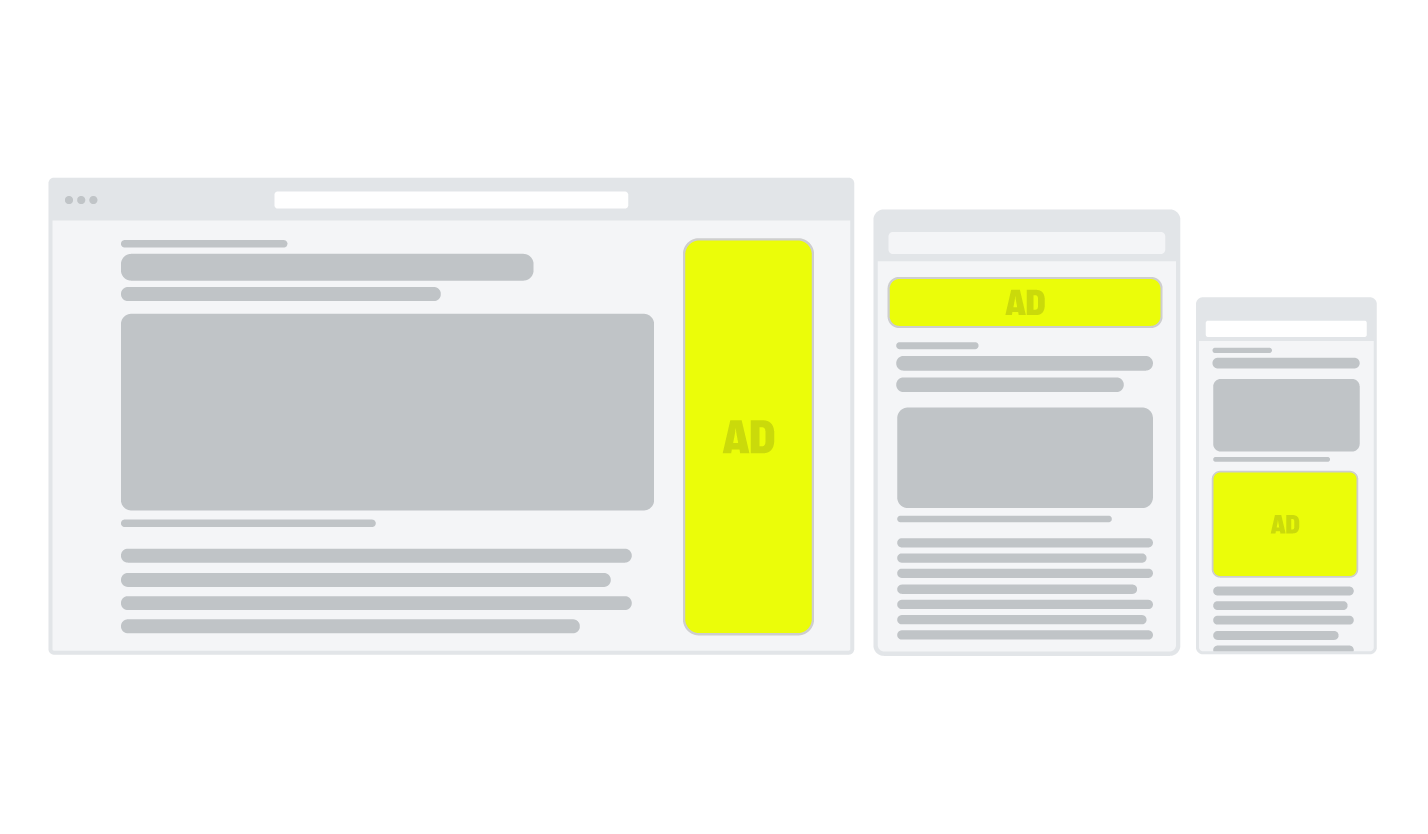
Display ads, also known as banner ads, can be placed easily within a website’s layout. You can find them at the head, footer, or sides of a page. They come in a variety of sizes and formats: static or animated, simple or rich media.
They don’t interrupt. They don’t sneak up on users. They sit there, visible and consistent, building awareness while driving clicks.
Sometimes the classics stick around because they work.
Why Display Ads Work
Top Verticals

Anime & Manga

iGaming

eCommerce

Adult & Dating

Gaming
Why Choose Adcash
Display Ads?
Advertisers
Premium Traffic, Global Scale
Access high-quality inventory worldwide, filtered by our anti-fraud systems.
Advanced Targeting
Target by GEO, device, OS, browser, carrier, connection type, and more. Precision without complexity.
Publishers
Consistent Monetization
Stable CPM demand across verticals keeps revenue flowing.
Easy Integration
Fast setup. Flexible placements. Works seamlessly across desktop and mobile.
FAQ
How To Create Display Ads
Start simple. Strong visual. One clear message. One clear action. Use high-contrast design, minimal text, and a direct CTA like “Download Now” or “Claim Bonus.”
Design for small attention spans. Test multiple variations. Kill the weak ones fast. If it looks busy, it won’t convert.
What is a Good CTR for Display Ads
It depends on targeting, GEO, and vertical, but generally, 0.1%–1% is a normal range for display.
High-intent campaigns can go beyond that. Broad awareness campaigns may sit lower. Context matters more than vanity benchmarks. Compare performance within your own funnel, not someone else’s screenshot.
How to Optimize Display Ads
Start with targeting. Refine GEO, device, OS, and placements. Then test creatives. Swap headlines. Change visuals. Adjust CTAs.
Next, cut underperforming zones. Increase bids on converting traffic. Optimization isn’t magic. It’s all about disciplined testing and fast decision-making.
How Much Do Display Ads Cost?
Display ads typically run on CPM (cost per thousand impressions). Pricing depends on GEO, traffic quality, competition, and targeting depth. Premium traffic costs more, but usually performs better.