How to Handle Every Earn: Your Guide to F1 Advertising 2026
For both advertisers and publishers who want to have a strong performance during the upcoming F1 season, there are some key things to take into account. Target the GEOs with the most traffic; think Tier 1 (US, UK, Germany, Australia, Canada). Prep your campaigns and pages for the race-day traffic spikes, but don’t ignore the build-up or fallout. Make the most of Adcash’s highest-performing ad formats (Pop-Under, Interstitial, In-Page Push, and Video Slider) to succeed.
The script is being flipped upside down under when F1 lands back in Australia on March 8th. We’ll see the biggest changes coming in over 10 years of racing, and were here to get you in pole position. The good news is your strategy should be the same, a tested and true formula that works every time. Stay on track to find out what it is.
The Rule Shake-Up
Whilst most teams are keeping the same drivers, all the changes will be with the cars themselves.
Here’s what’s actually changing, without the engineering manual waffle:
▪️ Brand-new aero philosophy: Goodbye DRS as we know it. Active aerodynamics let cars alter wing positions on the fly for speed or downforce, enabling closer racing and more overtaking.
▪️ Hybrid power overhaul: The engines still use a 1.6-litre V6 turbo, but electric output has nearly tripled, creating a true 50/50 balance between combustion and electric power.
▪️ Sustainability on track: Cars will run on Advanced Sustainable Fuels. This is a big win for green tech and real-world relevance.
▪️ Different car dynamics: New chassis specs mean lighter, narrower, and more agile cars, with significant reductions in drag and altered aerodynamic loads.
What This Means
Everything is up in the air. There are no massive favorites. Massive change means massive questions. Massive questions mean everyone will be watching. Huge traffic opportunities every week.
Countries to Target
F1 is a truly global sport – we’ve got massive traffic popping up all over the world.
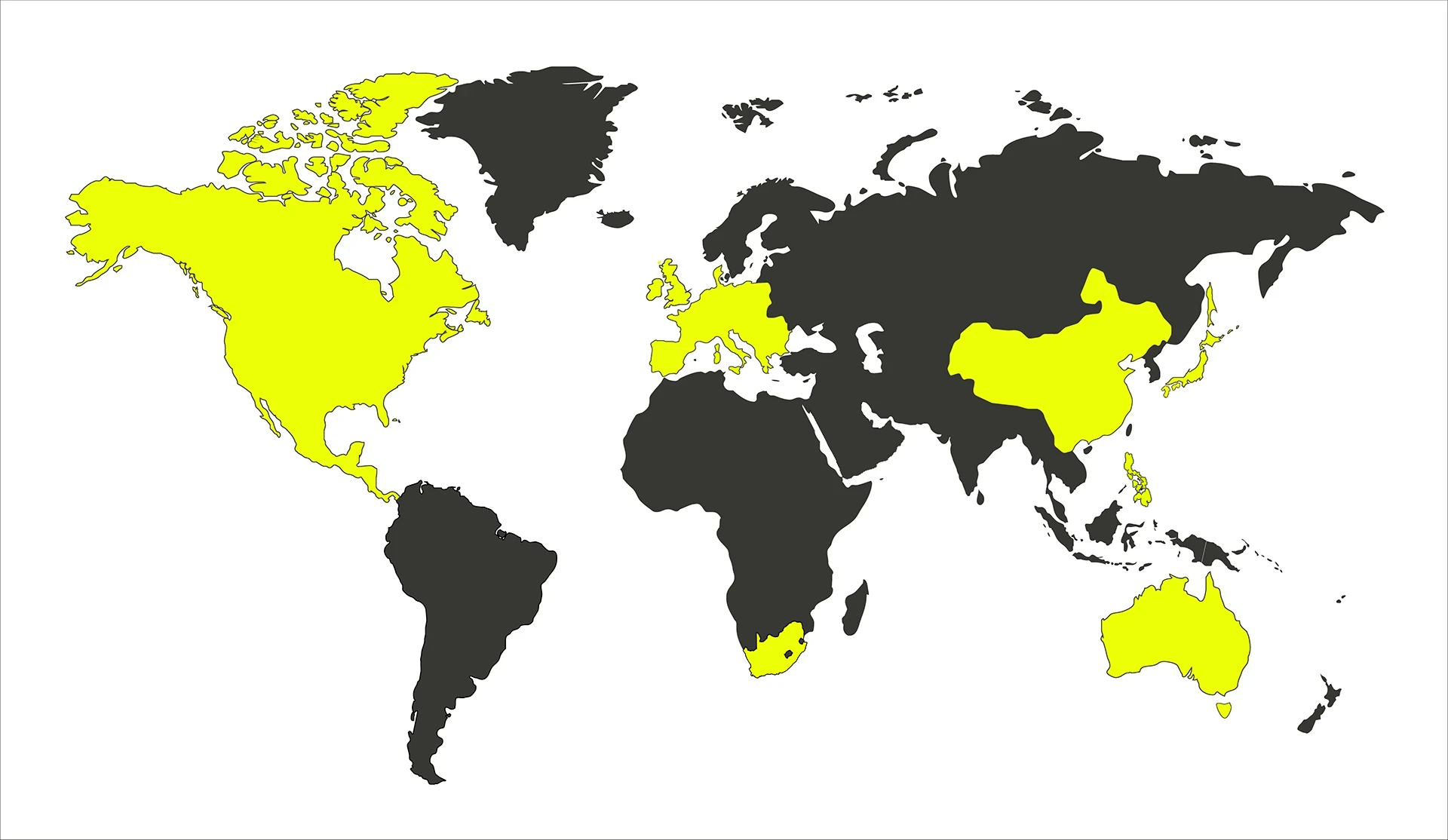
There is always huge interest from the US 🇺🇲. It looks like it’s only going to grow, with an Oscar-nominated movie out AND Cadillac entering F1 as the newest team on the grid. Expect masses of eyes from the UK 🇬🇧 too – it’s the birthplace of racing (and the world champion) after all! You’re also going to find success with F1 advertising in:
- Germany 🇩🇪
- Philippines 🇵🇭
- Canada 🇨🇦
- Netherlands 🇳🇱
- Spain 🇪🇸
- South Africa 🇿🇦
- Australia 🇦🇺
- Italy 🇮🇹
F1 Advertising Tips for the Season Ahead
Here we go then. 10 months of racing (and drama) ahead of us. From the return of Perez and Bottas to the questions over Max “No-Fun” Verstappen’s future, anything can happen. To keep the drama on the track and away from your budget, here are the key dates to target:
- Australia GP (Season Opener) – March 8th
- Monaco GP – June 5th
- Silverstone GP – July 3rd
- Spain GP (new track) – September 11th
- Singapore GP – October 9th
- Abu Dhabi GP (Season Closer) – December 3rd
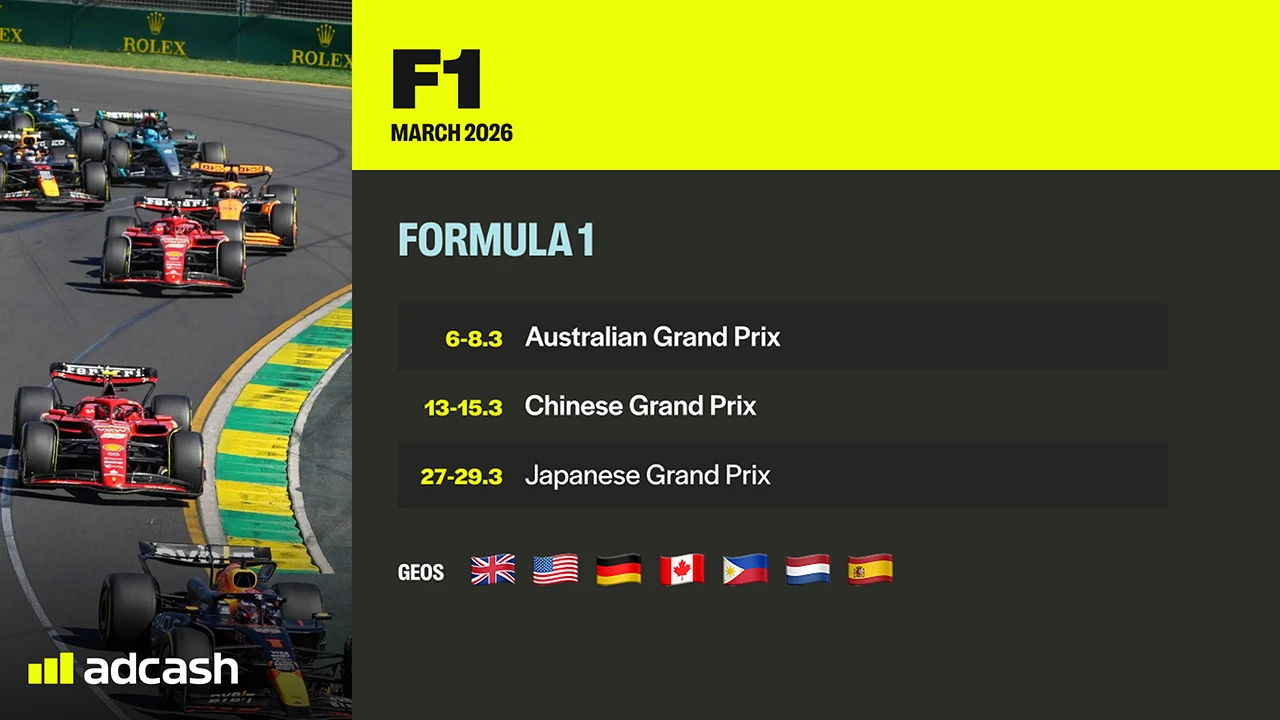
Keep one eye on the schedule, and the other on the leaderboard. The closer the competition at the top, the more people will want to tune in.
Ad Content
You’re reading this because you know how massive F1 is and how crazy profits can get if you play your cards right. But so do your competitors. So you need to stand out. Tap into high contrast imagery. Go all in on race narratives. Play on the culture and vibe of the race location.

The more fans feel a part of the action, the more they’ll click to be part of the action.
When to Start Your F1 Advertising Campaign Engines
Race Week Build-Up
The chatter ramps up fast. Driver interviews. Rumours. Strategy debates. Content consumption spikes before a single wheel turns.
If you want awareness and engagement before peak chaos hits, this is your runway.
Qualifying Saturday
F1 isn’t just about the race day itself. Qualifying can often be just as exciting, with a growing audience. Shock eliminations. Pole position battles. Unexpected heroes. Fans are tuned in. Huge second-screen moments – time to go big on mobile as eyes check stats, tables, and social media reactions.
Race Day Sunday
It’s not background noise anymore. It’s live, tense, and unpredictable. Traffic peaks. Streams spike. Social explodes. If you want maximum reach and emotional intensity, this is your heavyweight moment.
Post-Race Fallout
The race ends, and the arguments begin. Debates and memes carry into the week. Fans stay engaged longer than you’d think. Intensity is down, but interest remains. Smart brands extend campaign life instead of shutting it off after the chequered flag.
What to Promote During the 2026 F1 Season
New season. Different angles. The audience is the same: obsessed, analytical, and loyal. But what they care about shifts with the narrative. Here’s where smart advertisers focus.
iGaming & Sports
This season starts with uncertainty. New regulations always scramble expectations. Who adapted fastest? Who miscalculated (Answer: Aston Martin)? Who’s overhyped?
Early rounds are volatile. Mid-season upgrades change momentum. Sprint weekends create extra markets. Betting brands should lean into unpredictability. Promote qualifying markets. Fastest laps and head-to-head driver battles.
When the hierarchy isn’t settled, engagement climbs.
News, Media & Content Platforms
F1 is constantly being dissected. The 2026 regulation shift means fans want explanations. Aero changes. Hybrid deployment. What does it all mean??
If you publish content, race weekends are recurring traffic events. Plan around them. Structure campaigns around the calendar, not randomly throughout the month.
VPN & Streaming Services
Formula 1 is global. Broadcast rights are fragmented. Feeds differ by country.
Position around flexibility and uninterrupted access, especially during major races. When something goes wrong with a stream, users act fast. Be visible in those moments.
Merchandise & E-Commerce
Focus on the start of the season with new merch. Fans want to match the new liveries, especially.
Limited editions tied to specific races or title battles convert well. So do bundles around season openers and finales. Tie offers to moments. When emotion peaks, purchasing intent follows.
Ad Formats That Fit the Moment
F1 traffic isn’t passive. You’ve got intense, short bursts around sessions. Your format choice should reflect that.
Pop-Under
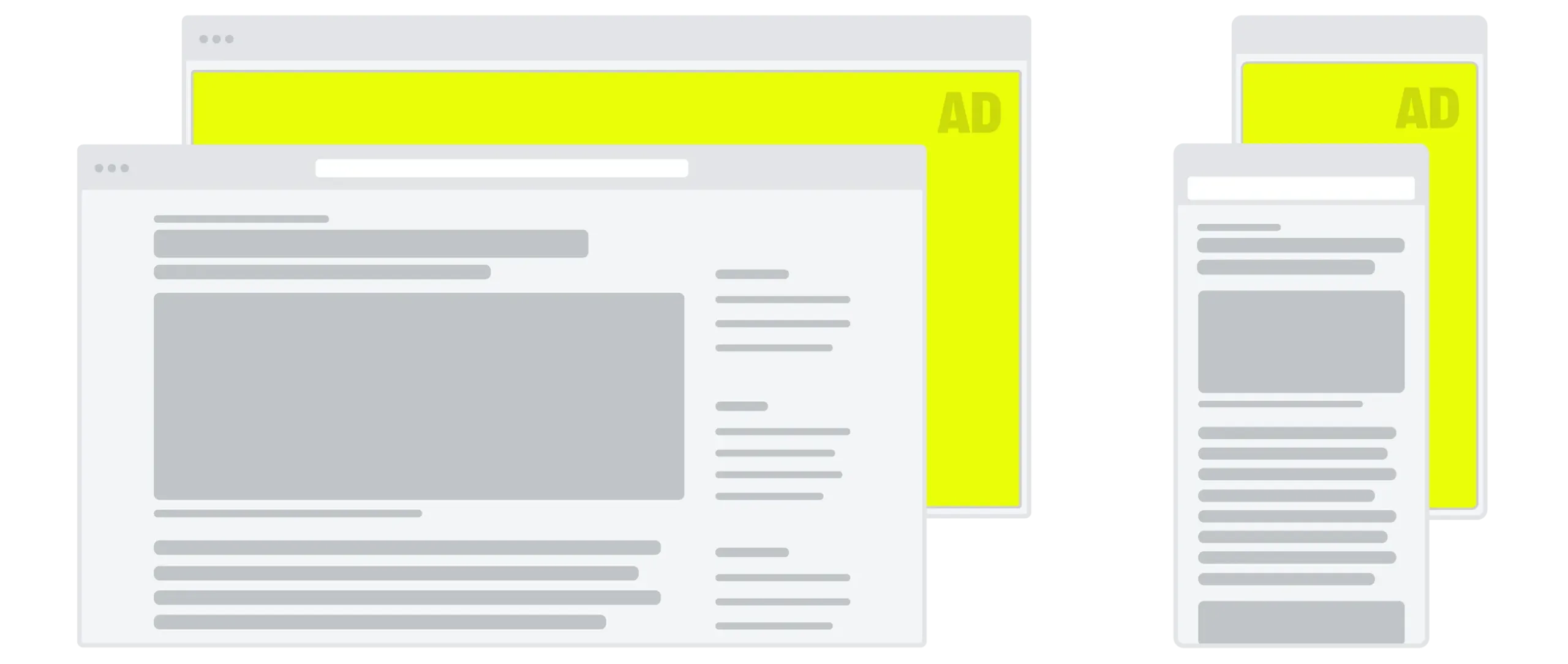
Strong for sustained performance across race weekends without disrupting the user journey. Ideal when traffic spikes, but users are focused on live content. It works quietly in the background while attention stays on the event.
In-Page Push & Interstitials
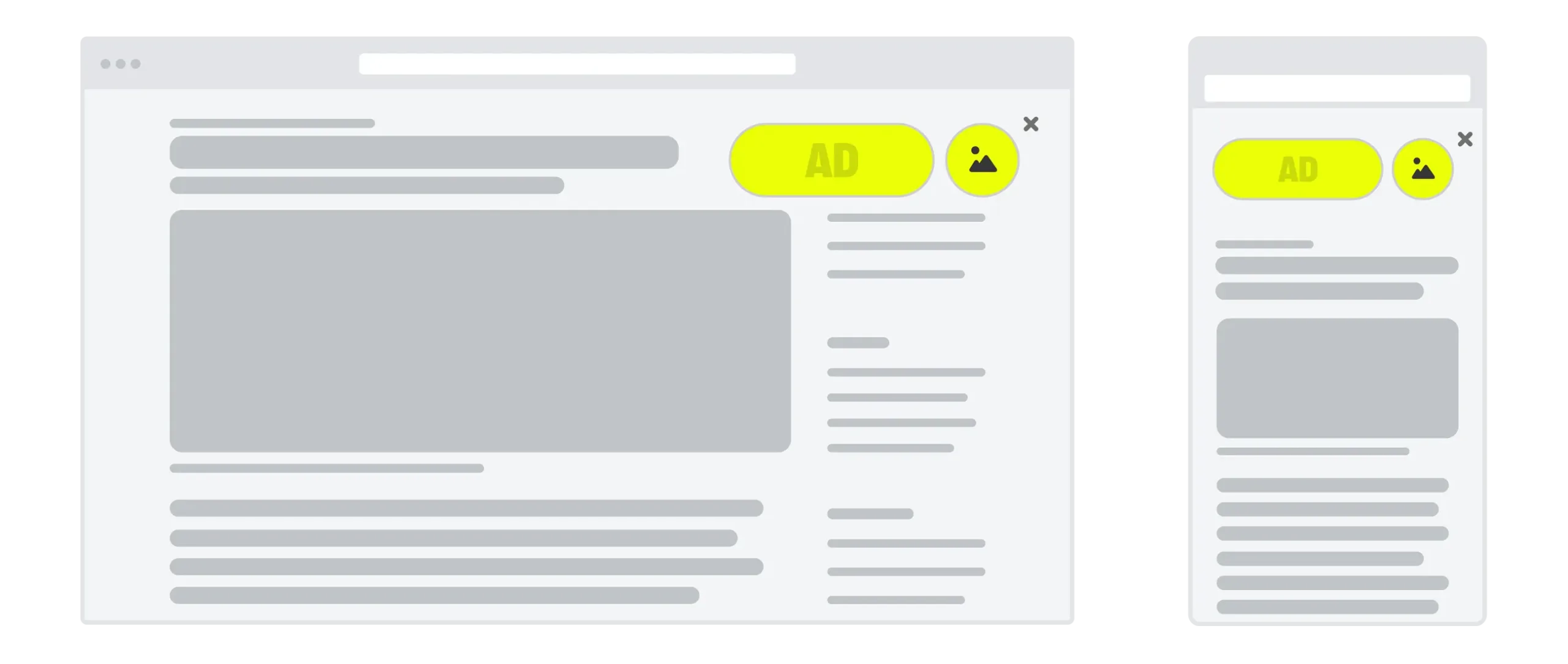
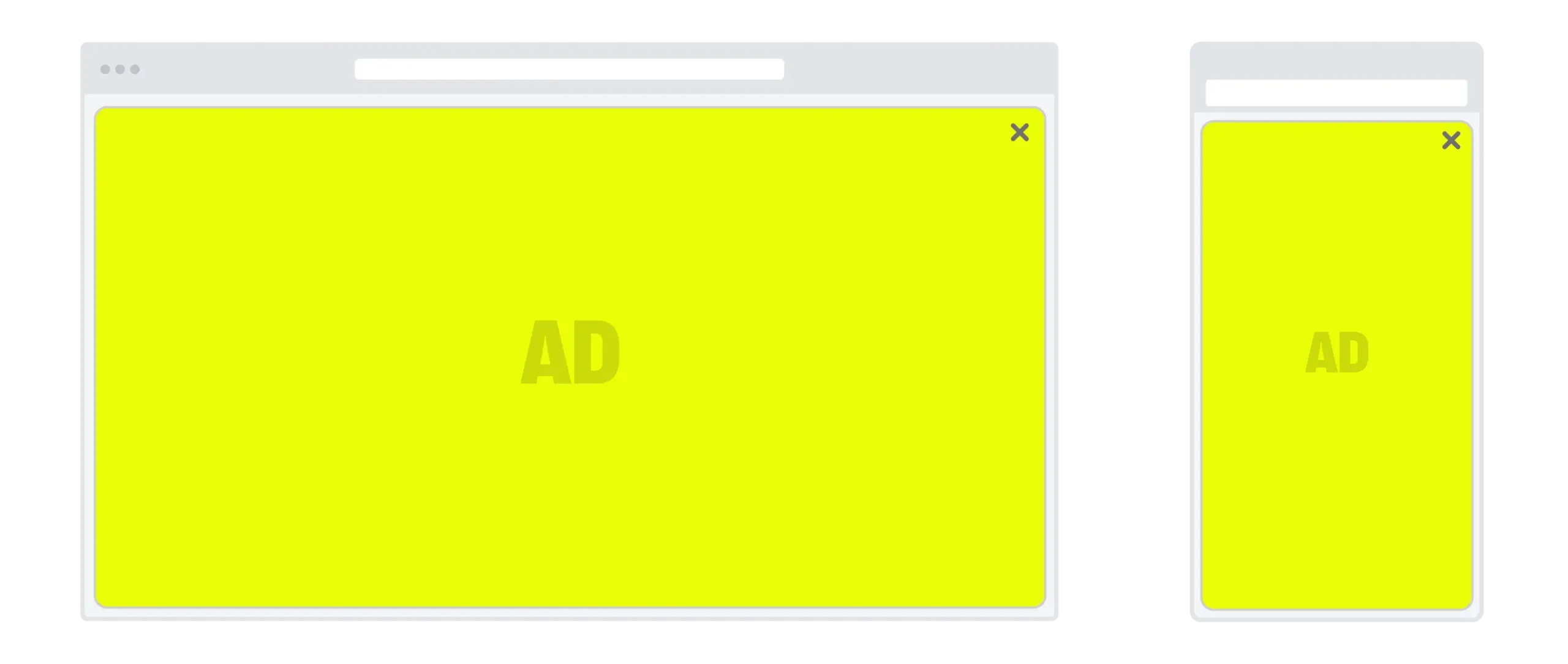
Best used during peak windows, i.e., qualifying and race day. When engagement is already high, bold placements perform. Just don’t overdo it. The goal is amplification, not irritation.
Video Sliders
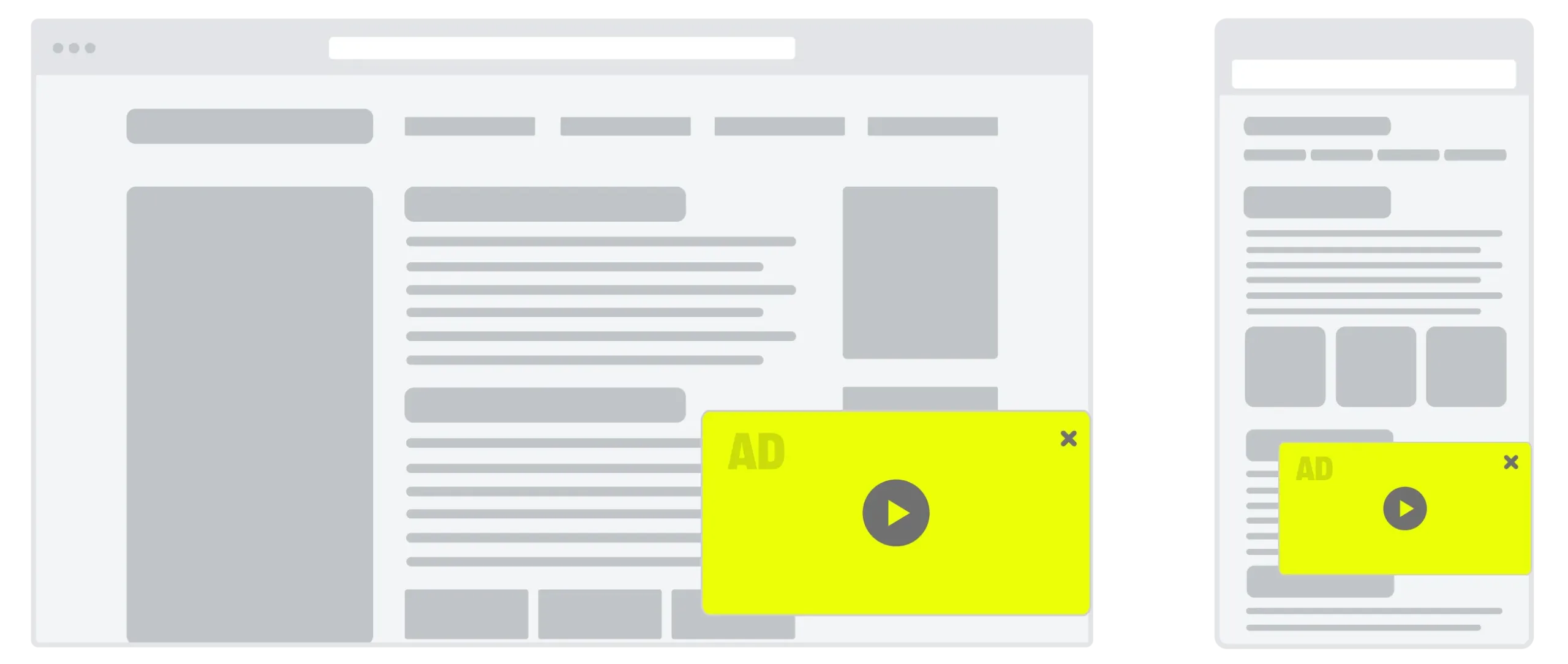
Video Slider ads sit neatly at the edge of the screen, staying visible without interrupting live content. That makes them ideal during qualifying sessions, race builds, and highlight recaps when users are actively engaged but still scrolling. In other words, great with mobile audiences.
How to Structure Your F1 Advertising Campaign Strategy
Running ads during F1 isn’t enough. The structure behind them matters more.
Align with the Calendar
Build campaigns around:
- Opening rounds (maximum hype)
- Iconic races (Monaco, Silverstone, Las Vegas)
- Title-deciding weekends
Traffic clusters around these events. Treat them as anchor points.
Use Context in Targeting
Include race locations, driver names, regulation topics, and team rivalries in creatives and landing pages. Generic messaging gets ignored. Contextual messaging performs.
“British GP Weekend Offer” will always outperform “Special Discount.”
Localize by Grand Prix
F1 weekends go beyond the race. It’s a weekend of cultural celebration. A Dutch crowd during Zandvoort weekend? That’s a sea of orange and unapologetic Verstappen loyalty. Monza? Ferrari isn’t a team. It’s a religion.
The online scene is no different. Same campaign structure. Different emotional triggers.
Swap the hero driver. Adjust the tone. Lean into local pride. Reference the circuit. Mention the rivalry that matters there, not globally. A generic “F1 Weekend Promo” won’t hit the same in Silverstone as it does in São Paulo.
Create Event-Based Promotions
Time-limited deals tied to specific race weekends drive urgency. Three-day offers. Race-day bonuses. Post-race discounts. F1 gives you built-in countdown timers every other week. Use them.
Publishers – Simplify the Execution with Autotag
During a packed 24-race season, manual optimization becomes a liability.
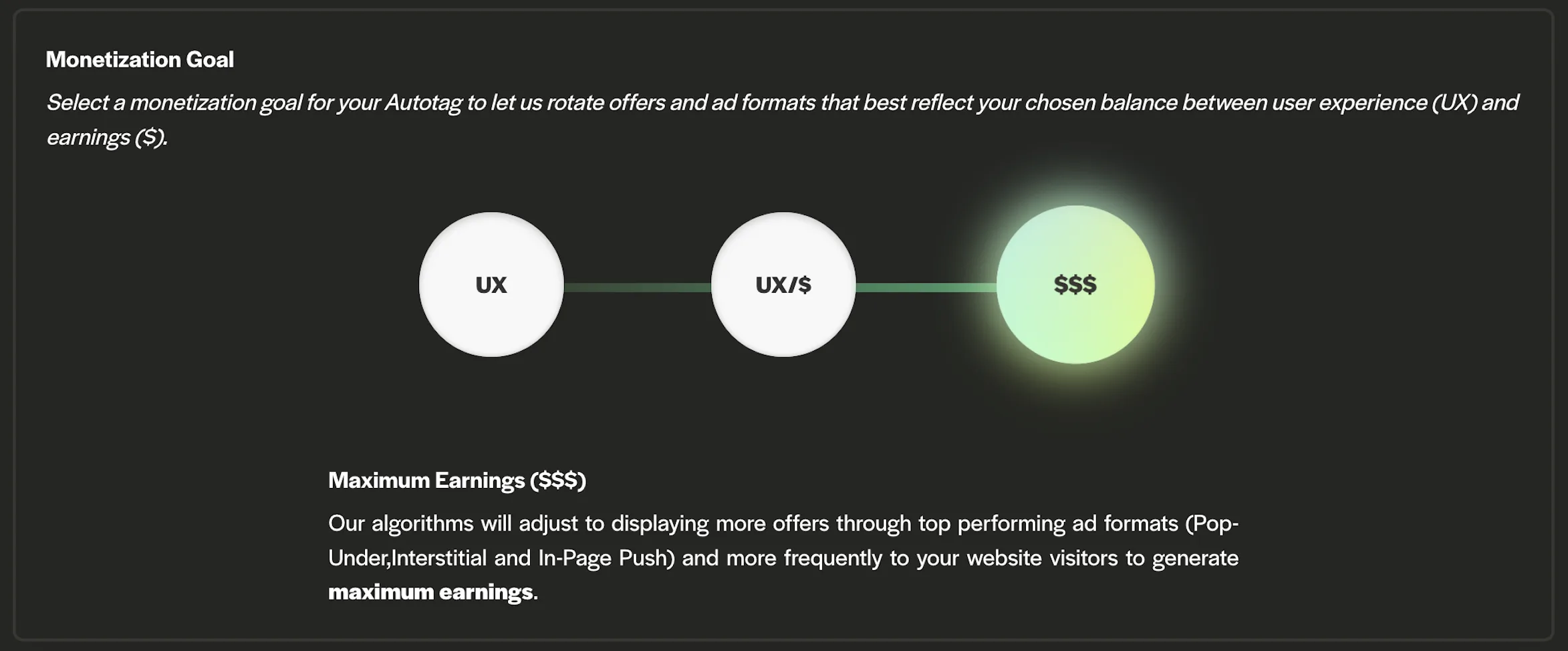
Autotag adapts formats automatically based on traffic patterns and performance data. You decide whether revenue or user experience is the priority. The 4-in-1 system handles the rest. Less micromanaging. More efficiency.
Conclusion
New regulations always reset the competitive order. That unpredictability fuels engagement. Fans will watch closely in the opening races. They’ll debate upgrades mid-season. They’ll obsess over the standings in the final stretch. The advertisers who win in 2026 won’t just “run during F1.” They’ll build around its rhythm.
Plan around key weekends. Stay on the pulse with our sports calendar. Scale when attention peaks. The season is long. Attention isn’t.
Share

Peter Howarth
Content Writer, Adcash
Good writing should feel like a conversation, not a lecture. I obsess over word choice so you don’t have to.





Join the conversation
Your email address will not be published. Required fields are marked *