
Case Study: VOD Advertiser Reduces Spend by €4,478, Maintains Performance
Video on Demand (VOD) advertising lets brands reach engaged viewers on streaming platforms with targeted, measurable, and cost-effective campaigns. As more people ditch terrestrial TV for on-demand content, VOD has become one of the strongest channels for advertisers chasing real ROI, especially in sports. In this case study, we break down how one advertiser pulled in serious impact while spending far less than expected, and what you can learn from their playbook.
The numbers might surprise you. The takeaways definitely will. Below, we’ll walk through the benefits of VOD advertising, the tactics that made this campaign work, and the practical tips you can apply to your own setup. Ready to get more out of your VOD spend? Read more about VOD advertising campaigns, then we’ll break down how it all works in practice.
Why Are Sports-Themed VOD Ads Effective?
Engagement
Sports fans are among the most committed to their interest across any vertical. This equates to a highly engaged audience, a strong degree of intent, and ultimately, a potentially high conversion rate for your offer or service.
Customization
Ads can be tailored based on the viewer’s preferences, viewing history, and geographic location, enhancing relevance and impact.
Convenience
VOD content is available 24/7, allowing viewers to watch at their convenience. This flexibility increases the likelihood of ad exposure, as viewers are more likely to be receptive.
Passion
Sports evoke strong emotions and loyalty. Ads that align with these emotions can create a deep connection with viewers, and allow you to target specific demographics, ensuring ads reach the right audience.
Target Spending vs. Actual Spending
Whether you’re a small business or a global brand, a lack of consideration for target vs actual spending can make or break your campaign.
Target spending is essentially your planned budget for the campaign. It’s the amount of money you intend to spend to achieve your advertising goals.
Actual spending, on the other hand, is the real amount of money you end up spending during your campaign. This can sometimes be higher or lower than your target spending due to various factors.
Why mention this, you may ask? In the case study to follow, our advertiser performed admirably on this front, and it wasn’t simply a stroke of luck…
Campaign Breakdown
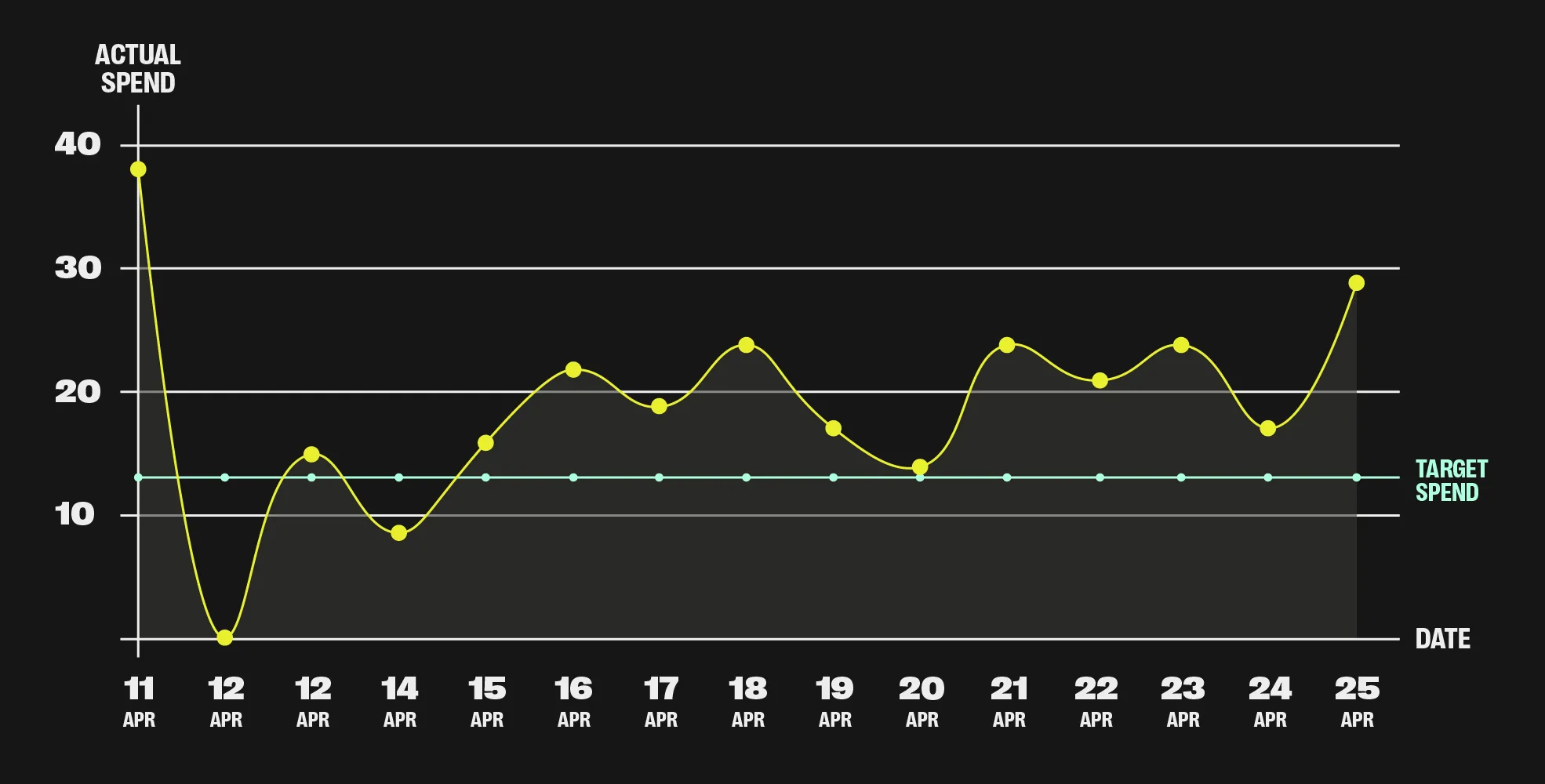
With the overview done and dusted, let’s take a look at a standout performance from earlier this year – we’ll show you a campaign snapshot of 15 days.
First off, we’ll look at the general campaign setup.
Campaign Setup
| Ad Format(s) | Bid Type(s) | Device(s) | Operating System(s) | GEO(s) | Website Vertical |
|---|---|---|---|---|---|
| Pop-Under | CPA-Target & CPM | Desktop & Mobile | All | US, Argentina, Canada | Sports |
Campaign Results
| Impressions | Conversions | eCPM | eCPA | Target Cost | Real Cost | Target Spend | Actual Spend |
|---|---|---|---|---|---|---|---|
| 3,055,996 | 1,703 | €5.7845 | €10.3801 | €13.01 | €10.38 | €22,156.03 | €17,677.36 |
| Spending Difference | |||||||
| €4,478.67 | |||||||
As you can see, this US Mobile campaign was a whopping 4,478 EUR under target spending!
But how did our hotshot go about achieving this?
The campaign was kicked off with a CPM (Cost Per Thousand Impressions) strategy. This initial move was all about gathering crucial data on user engagement and conversions. Once they had enough information to discern which user types and geos were most effective, they made a strategic pivot to a CPA Target bid type. Without that initial CPM data, it would have been tough to gauge just how well CPA Target would perform, so the initial testing period was crucial to success.
Now, here’s where things get interesting. The CPA results started strong with a big boost, but then quickly tapered off. It wasn’t quite the sustainable success they hoped for, leading to lower efficiency. So, the advertiser had to get smart with their ad scheduling.
Instead of running ads around the clock, they checked the sports league schedules and timed their ads to run during peak viewing periods. This strategy worked wonders, even with CPM, by narrowing the ad delivery window, making traffic buying far more efficient.
Zone capping played a pivotal role, too. By capping the number of impressions from each source, the advertiser ensured they were getting unique views without repeatedly blowing their budget on the same audience. Once they switched to CPA Target, they decided to remove the 1,000 Impressions-per-zone SubID cap to allow greater flexibility.
While it’s encouraged to eventually loosen the reins on zone capping, you should run a tight ship when it comes to time targeting for sports-related campaigns.
Be sure to keep an eye on the schedules for live games and run your ads accordingly.

Another key insight from the campaign was the performance difference across devices. Mobile outperformed desktop significantly, which led to separate campaign strategies for each.
One crucial lesson is the importance of adjusting target costs dynamically. The model learns and adapts, and if actual costs start creeping up, it’s vital to manage the system’s expectations. Finding that sweet spot in spending is critical; without it, the campaign budget can become too restrictive, limiting reach and impact.
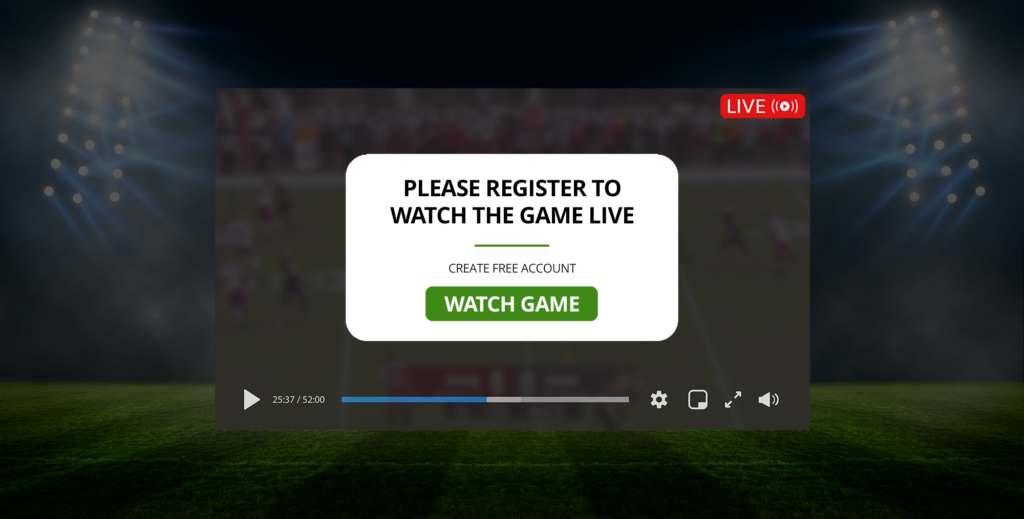 An example of a sports streaming ad
The use of sports-themed backgrounds and landing pages also played a significant role in the campaign’s success. These elements tied perfectly to the sports vertical, making the ads more relatable and engaging for the audience. Plus, they employed a clever tactic with fake loading screens, teasing users and making them feel like they were about to access exclusive content before presenting the actual offer.
How to Optimize VOD Advertising Campaigns
- Start broad, then narrow down.
- Use conversion tracking
- Switch from CPM to CPA-Target
- Cap ad frequency at one impression per user per day
- Adjust bids regularly based on performance.
- Sports-event dayparting
- Sports-themed creatives
- Mobile-first segmentation
- Refresh and A/B test creatives often
| Before Optimization | After Optimization |
|---|---|
| Higher eCPA | Lower eCPA |
| Broad Targeting | Refined Sports Targeting |
| Static Bidding | CPA-Target Optimization |
| Inconsistent Conversions | Stable Conversion Flow |
| Higher Wasted Spend | €4,478 Saved |
VOD advertising is one of the most efficient ways to reach engaged viewers right now, and this campaign proves you don’t need a massive budget to make it work. The formula is simple: start broad, follow the data, and tighten your targeting as you learn what converts.
Want to run profitable VOD advertising campaigns with real-time optimization and premium streaming traffic? Sign up and take your campaign to the next level.
Share
Learn more
Explore our resources and discover how to cultivate wisdom in an information-saturated world.



FAQ
What is an advertising network?
An ad network is like a matchmaker for digital advertising. It connects advertisers (that’s you) with websites (aka publishers) that want to sell ad space. Instead of negotiating with individual sites, you use an ad platform like Adcash to place your ads where they’ll hit the right audience – based on their demographics, interests, or online behavior. More reach, less hassle.
What types of ad formats are there?
There are five main types of ad formats.
Pop-up ads – These appear in a new window or overlay to grab attention and increase engagement.
Pop-under ads – Similar to pop-ups, but they load discreetly in the background, ensuring a non-intrusive user experience.
Interstitial ads – Full-screen ads that appear during content transitions (like between webpage loads or app screens) for maximum visibility.
In-page push ads – These look like traditional push notifications but appear directly on the webpage without requiring user opt-in.
Banner ads – Classic display ads embedded within the webpage, featuring images, text, or animations to drive clicks.
How Can Publishers Balance Revenue and User Experience?
Maximizing earnings shouldn’t mean annoying your visitors. The key? Smart ad placement and quality formats.
Use pop-under ads instead of intrusive pop-ups to keep the user journey smooth.
Limit interstitial ads to natural breakpoints in content flow.
Optimize push ads so they feel native rather than disruptive.
Work with a trusted ad network for publishers (like Adcash) that provides real-time optimization and non-intrusive ad delivery.
With the right balance, you can monetize your website without driving users away.
How do I advertise online?
Pick a solid advertising platform that connects you with top publishers (hint: Adcash). Whether you want pop-up ads, display banners, native ads, or video ads, we make it simple. Set your budget, target the right audience, and launch. Our adserver and programmatic advertising platform handle the heavy lifting – real-time analytics, smart ad optimization, and laser-focused targeting to maximize your ROI.