
CPM Bidding Strategy: How to Optimize and Scale Profitable Campaigns
A CPM bidding strategy is the method advertisers use to decide how much to pay for 1,000 impressions, based on performance data and profitability goals. In this guide, you’ll learn how to build a profitable CPM bidding strategy, set the right target bid, and optimize campaigns using real performance data, including zone-based techniques in Adcash that help you scale what works and cut what doesn’t.
Running CPM campaigns sounds simple. You pay for impressions. Traffic comes in. Conversions happen. Money follows. Except… that’s not what usually happens.
A large number of CPM campaigns lose money. Not because of bad traffic, but because bidding isn’t optimized.. Go too high, and you burn through budget. Go too low, and nothing really happens.
The difference usually comes down to one thing: how you optimize your bidding. Without a system in place, such as Adcash’s zone-based optimization, most campaigns end up paying for traffic that never converts. With it, you can identify what works, cut what doesn’t, and actually scale profitably.

Key Takeaways
▪️Data-Driven Bidding: A successful CPM strategy requires adjusting bids based on conversion rates and payouts rather than picking a static number.
▪️Target Formula: Use (Payout × Conversion Rate) × 1000 as a baseline to determine your maximum affordable CPM.
▪️Zone-Based Optimization: Treat traffic segments (Zone IDs) individually to cut waste and scale high-performing placements.
▪️Test with CPA: Reduce initial risk by using CPA bidding to identify converting GEOs before switching to CPM for scale.
▪️Monitor Win Rates: High profitability with low volume often indicates a bid that is too low to win competitive auctions.
What is a CPM Bidding Strategy?
Mille = 1000. It’s Latin. Fancy! Look at you using Latin! But CPM just means you’re paying for every 1,000 impressions. Straightforward. But your bid does more than control cost.
A CPM bidding strategy dynamically adjusts bids based on data to maximize profitable impressions. In other words, it decides how often you win auctions, what kind of traffic you get, and how fast your campaign learns.
In other words, your bid shapes everything. The goal isn’t to find a “perfect number.” It’s to stay in that sweet spot where you’re getting enough volume to learn, without paying more than the traffic is worth.
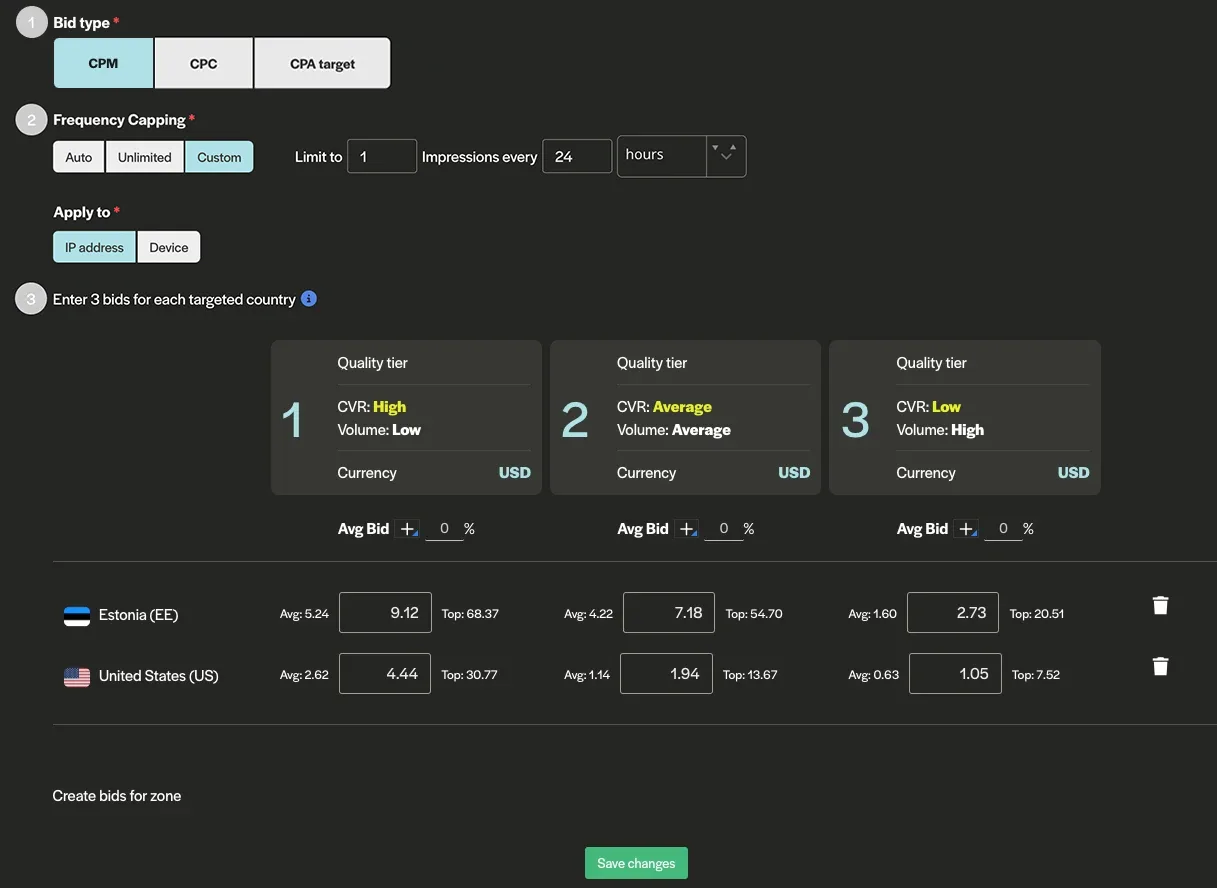
How to Set Your Target CPM Bid
Your target CPM comes down to one simple question: how much can you afford to pay for 1,000 impressions and still make money? That depends on two things. Your payout and your conversion rate.
If your offer pays €100 but only a small fraction of users convert, your CPM needs to stay low. If conversions are strong, you can afford to bid higher and still stay profitable.
If you want a rough benchmark, you can think of it like this:
Target CPM ≈ (Payout × Conversion Rate) × 1000
Example: A €50 payout × 0.1% CR = €0.50 CPM.
It’s not perfect, but it gives you a quick sense of what your traffic is worth.
Your bid should also match your campaign objective. If your goal is reach, you may accept a different bid than you would for a conversion-focused campaign. If your goal is conversions, your CPM has to stay tied to what that traffic can realistically return.
At the start, don’t overthink it. Set a reasonable bid, launch, and focus on getting data. Trying to calculate the “perfect” CPM upfront sounds smart, but campaigns only start making sense once they’re live. You’re not aiming for precision on day one. You’re simply aiming to get direction.
The Core CPM Optimization Framework
Every CPM campaign ends up telling a similar story.
▪️ Non-converting traffic: Spend without results that should be cut immediately.
▪️ Low-margin traffic: Converts but requires lower bids to reach profitability.
▪️ High-performing traffic: Profitable segments that should be scaled by increasing bids.
The problem is that, without proper optimization, all of that traffic gets treated the same. And that’s exactly how campaigns lose money. The goal is simple: stop treating all traffic equally, and start reacting to what it actually does.
Some platforms, including Adcash, also offer automated tools like CPA Target or smart optimization to help guide bidding decisions. Those tools can save time, but manual zone-based optimization still gives you the deepest level of control when you want to decide exactly where budget goes.
This kind of structured optimization isn’t just theory. In our video ad case study, the campaign significantly improved its ROAS by focusing on tracking multiple conversion events. It continuously optimized based on performance data, not just by increasing spend.
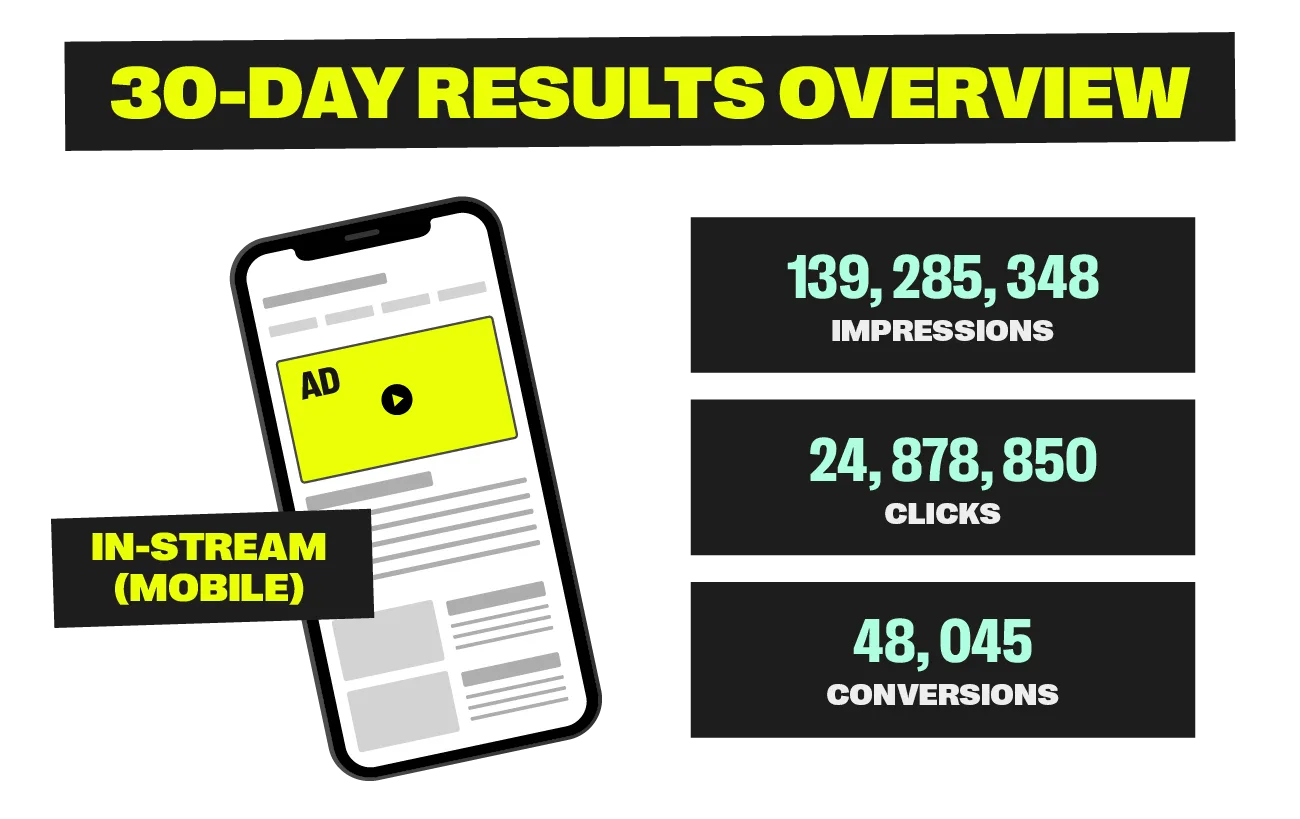
The takeaway is simple: profitability doesn’t come from traffic alone. It comes from how you analyze and adjust it.
How to Test with CPA and Scale with CPM
If you’re unsure where to begin, one effective approach is to start with CPA bidding to identify what works, then switch to CPM to scale it.
In our Pin-Submit case study, an advertiser first used CPA campaigns to test different GEOs and identify which ones were actually converting. Once they had clear performance data, they switched to CPM bidding to scale those same GEOs more efficiently.
With CPA, you pay a premium for the platform to find conversions for you. With CPM, you buy proven traffic at impression-level pricing. That gives you more control and can unlock better margins once you know which traffic is worth scaling.
This approach reduces risk early on and gives you a stronger foundation when setting your target CPM bid. Instead of guessing, you’re building your campaign on proven data.
From there, zone-based optimization becomes much more effective because you’re optimizing traffic that already has a track record of converting.
Zone-Based Optimization (Where Things Get Real)
This is where you stop thinking in “campaigns” and start thinking in traffic segments. On platforms like Adcash, each ad placement has a Zone ID that represents a traffic segment. Each one represents a different slice of traffic. Different behavior, different performance, different value. And they are never equal.
In practice, a small number of zones often drive most conversions, while others generate spend with no return. If you’re not optimizing at this level, you’re effectively blending good traffic with bad, and paying for both.
How to Optimize By Zone
Once your campaign is running and data starts coming in, you’ll see performance broken down by zones. That’s where the real decisions happen. Patterns show up fast.
▪️ Zero-Conversion Zones: Once a zone passes your spending threshold without a conversion, blacklist it to stop budget leakage.
▪️ Underperforming Zones: If a zone converts but the ROI is negative, lower the bid to find a profitable equilibrium.
▪️ Profitable Zones: Check your win rate; if it’s low, increase your bid to capture more volume from these high-value segments.
A low win rate means you’re losing auctions. Losing auctions means fewer impressions. And fewer impressions means missed revenue. Increase your bid on these zones, win more auctions, and scale what’s already working.

Going Deeper: Zones Vs Sources
Once you’re comfortable optimizing at the zone level, you can go more granular. Zones show you performance at the placement level. Sources go one step deeper. They break traffic down by where it actually comes from, especially across third-party supply (SSPs).
In simple terms, a single zone can include traffic from multiple sources. And not all of those sources perform the same. Source-based optimization lets you separate those differences and adjust your bids more precisely. It gives you more control, but also adds more complexity.
If you don’t have a solid handle on zones yet, going deeper won’t help. It’ll just give you more data to misread. Get the basics right first. Then level up.
Where Most CPM Campaigns Go Wrong
Most losing CPM campaigns don’t fail because of bad traffic. They fail because of bad decisions. Bidding too high at the start is one of the fastest ways to burn through budget before you’ve even gathered useful data. At the same time, cutting zones too early can be just as damaging. Decisions made on weak data usually lead to missed opportunities.
But the biggest mistake is more subtle. Treating all traffic the same. Without zone-based optimization, profitable and unprofitable traffic gets blended together. You keep spending, but you never really improve performance.
Ignoring win rate is another common issue. You might already have profitable zones, but if your bids are too low, you’re simply not winning enough auctions to scale them. None of these mistakes are complicated. But together, they’re exactly why many CPM campaigns stay unprofitable.

Conclusion
A profitable CPM bidding strategy isn’t about setting one bid and hoping for the best. It’s built on understanding what your traffic is actually worth—and adjusting based on real performance.
Start with a reasonable target CPM bid, launch your campaign, and focus on collecting data. From there, the difference between a losing campaign and a profitable one comes down to how you optimize.
▪️ Cut: Remove zones that fail to convert after sufficient testing.
▪️ Adjust: Lower bids on zones with high costs per acquisition.
▪️ Scale: Aggressively bid on profitable zones to maximize your win rate.
In practice, this is what makes CPM campaigns work. Without a form of optimization, you’re paying for traffic that never converts. With it, you’re actively shaping your campaign toward profitability. That’s the difference between burning budget and making money. Ready to put this into practice? Launch your campaigns with Adcash.
FAQ
What is a CPM bid?
A CPM bid is the amount you agree to pay for 1,000 impressions. It affects how often you win auctions and how much traffic volume your campaign can get. If you set it too low, you may lose auctions and limit delivery. If you set it too high, you can buy more impressions than the traffic is worth.
When does CPM bidding work well?
CPM bidding works well when you have a profitable target CPM and enough conversion data to guide optimization. It’s especially effective after CPA campaigns have helped you identify which GEOs, zones, or traffic segments actually convert. It’s less suited to early testing phases when you still don’t know what your traffic is worth.
Share

Peter Howarth
Content Writer, Adcash
Good writing should feel like a conversation, not a lecture. I obsess over word choice so you don’t have to.