
The Affiliate Marketer’s Guide to Last Click Attribution
Imagine a person training for a marathon. They train for months. They sweat. They suffer. They turn up on the day, ready to go.
And then, ten meters from the finish line, they stop. They can’t go on. They see you in the crowd and call you over. They put their number on your back and tell you to run the final 10 meters. You get the medal and the applause.
This is what last click attribution is.
It’s one of the most widely used attribution models in affiliate marketing, and for good reason. It’s simple and easy to measure. When a conversion happens, the affiliate or channel that wins the final click gets 100% of the credit.
For affiliate marketers focused on performance, payouts, and ROI, this is great. But as customer journeys become more complex, relying solely on last click attribution can create blind spots that affect long-term growth.
This guide explains how last click attribution works, where it excels, where it falls short, and how it compares to other attribution models.
What is Last Click Attribution?
Last click attribution is a single-touch attribution model that assigns full conversion credit to the final touchpoint a user interacts with before converting.
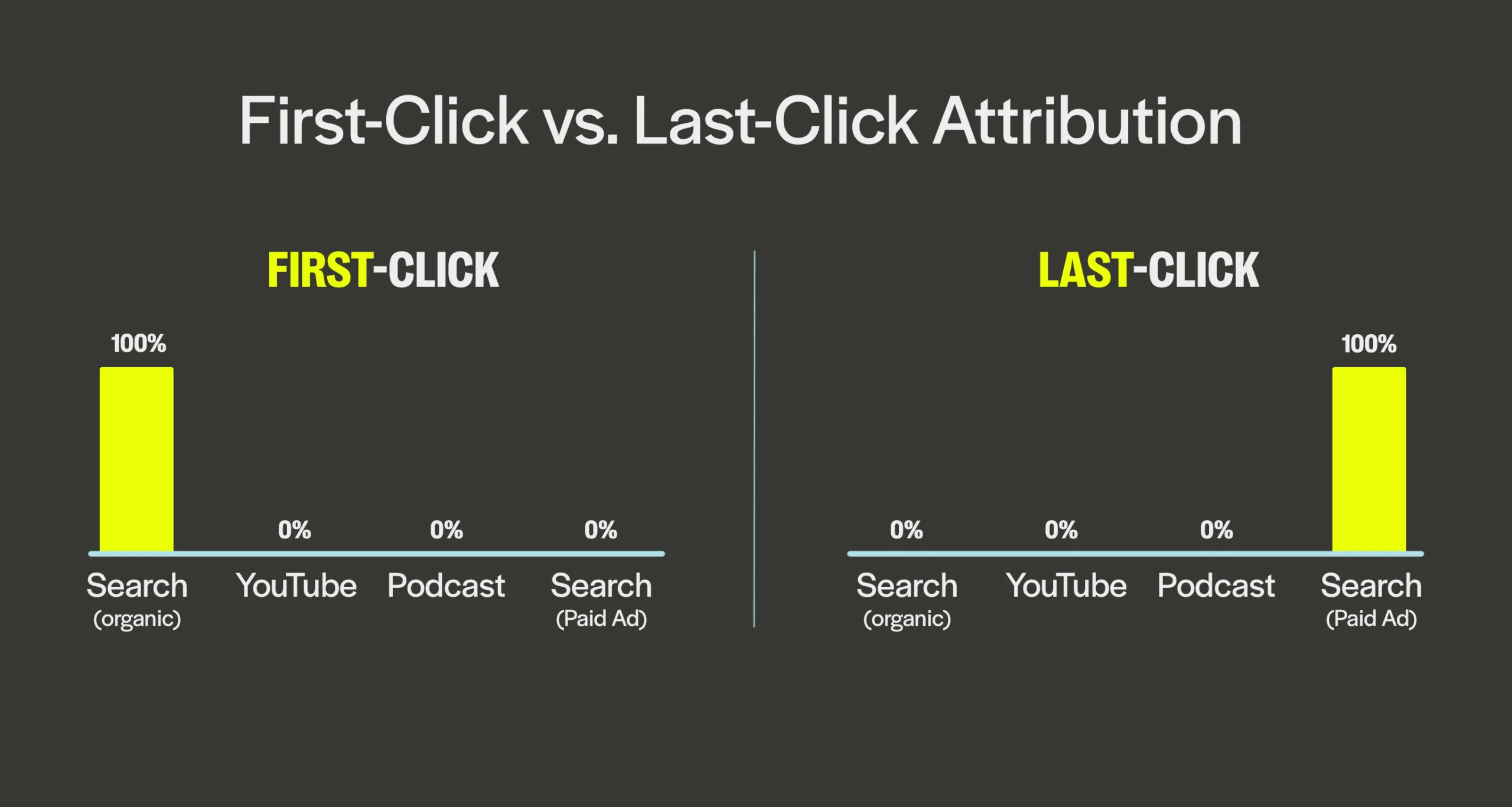
That final interaction could be:
- An affiliate link
- A paid search ad
- A retargeting campaign
- An email or promotional offer
For example, a user might first discover a brand through a blog post, later see a display ad, and finally click an affiliate link before making a purchase. Under a last click attribution model, only the affiliate link receives credit, while all previous touchpoints are ignored.
Advantages of Last Click Attribution
▪️Simplicity and transparency – Last click attribution is easy to understand, implement, and explain. There’s no complex weighting or modelling involved: the last interaction wins.
▪️Strong fit for affiliate marketing – Affiliate programs are often structured around last-click attribution because it provides a clear and enforceable way to assign commissions.
▪️Effective for bottom-of-funnel optimisation – For campaigns focused on immediate conversions, last click highlights which offers, creatives, or partners close the sale.
▪️Fast decision-making – Because results are straightforward, marketers can quickly pause, scale, or optimise campaigns based on performance.
Disadvantages of Last Click Attribution
▪️Ignores the full customer journey – Last click attribution overlooks earlier, important interactions users had with a product that create awareness, build trust, and influence consideration.
▪️Overvalues closing channels – Retargeting, branded search, and affiliates often receive unequal credit, even when other channels played a critical role.
▪️Misleading budget allocation – If decisions are made solely on last click data, marketers may not put importance on content, social, or upper-funnel traffic sources that drive long-term growth.
▪️Limited insight into brand building – Brand awareness campaigns rarely generate the final click, making their impact invisible in last click models.
Last Click Attribution vs Other Attribution Models
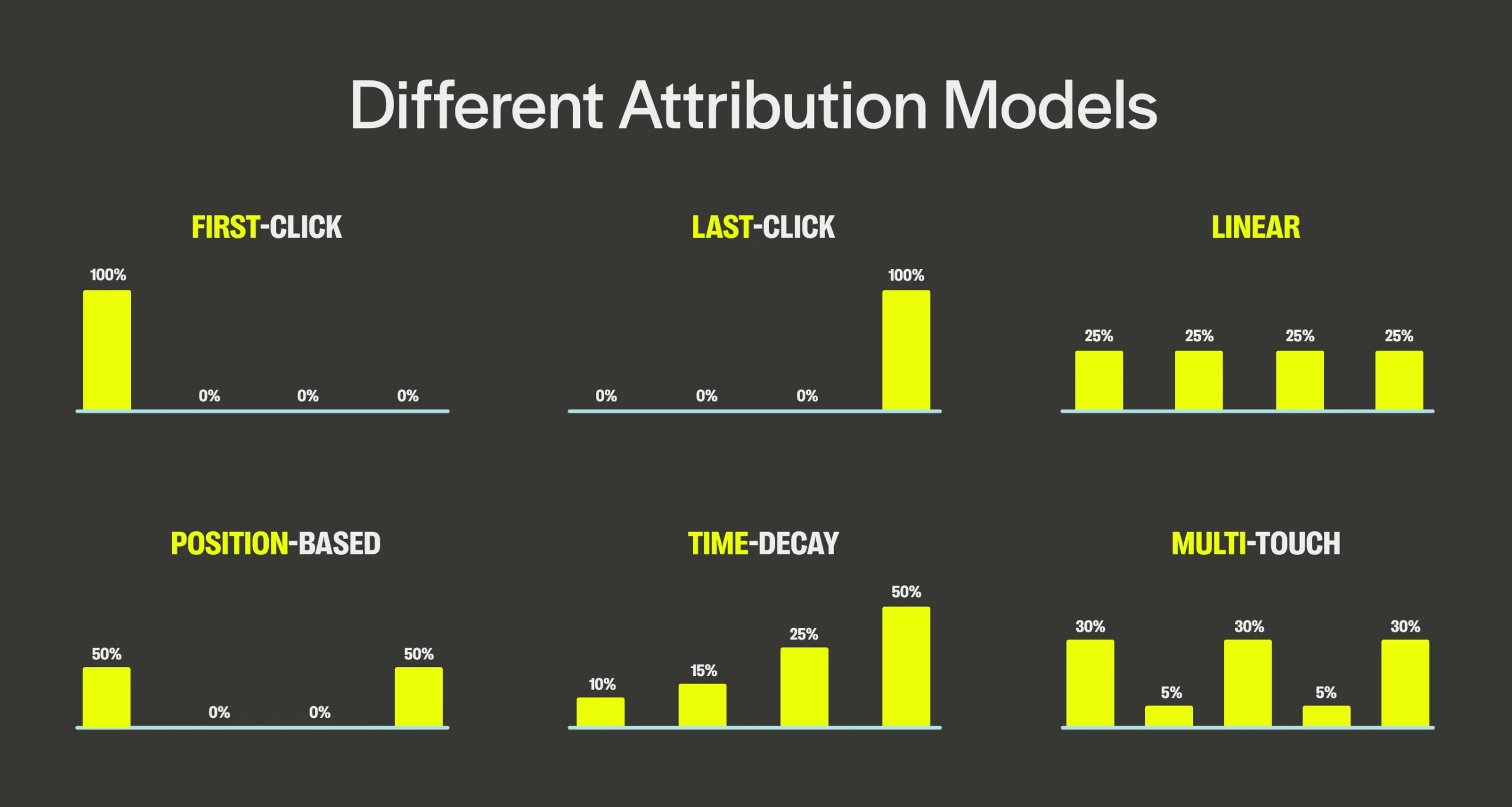
Last Click Attribution is far from the only model marketers can use. It’s important to understand all the different models to help choose the best one for your brand and current goals.
First Click Attribution
First click attribution assigns 100% of the credit to the first interaction. It highlights discovery and awareness but ignores what actually closes the conversion.
For example, say a user saw a new phone in a YouTube video. They start to do more research and eventually buy the phone. 100% of the credit and commission would go to the video creator, and not the writers of the research articles.
Linear Attribution
Linear attribution splits credit evenly across all touchpoints. It offers a more balanced view but assumes every interaction has an equal impact, which isn’t often the case. It seems fair on the surface, but often one exposure to a product has a far bigger impact than others. In this instance, it wouldn’t receive extra credit, even if it did more work.
Position-Based (U-Shaped) Attribution
This model assigns most credit to the first and last interactions, with the remainder distributed across middle touchpoints. It recognises both discovery and conversion drivers, as they are often seen as the most impactful.
Time-Decay Attribution
Time-decay attribution gives increasing weight to interactions closer to the conversion. It’s useful for longer sales cycles where recency matters.
W-Shaped Multi-Touch Attribution Model
The W-shaped model prioritises three key milestones: first touch, lead creation, and conversion, offering deeper insight into complex funnels.
Why Attribution Models Matter More Than Ever
Last click attribution still has a place, especially in affiliate marketing and performance-driven campaigns. But it shouldn’t be used in isolation. On top of that, affiliate tracking needs to be used more than ever.
As real-world examples like the PayPal Honey browser extension scandal have shown, attribution loopholes can distort credit, mislead advertisers, and shift value away from genuine traffic sources.
👉 Read more about how attribution manipulation impacts advertisers and affiliates alike.
Understanding attribution models isn’t just about analytics; it’s about protecting performance, fairness, and long-term growth.
Share

Peter Howarth
Content Writer, Adcash
Good writing should feel like a conversation, not a lecture. I obsess over word choice so you don’t have to.