
Double-Digit Sales Days 2026: How to Prep Campaigns for 9.9–12.12 in Southeast Asia
The first double-digit sales day is just a few weeks away, and now is the perfect time to prep your campaigns to catch all that traffic that is surely coming. This guide covers when to run your campaigns, which markets to target, and which formats and payment models get the most out of the traffic. If you’re running the sites where all this shopping happens, stick around. There’s a note for you near the end.
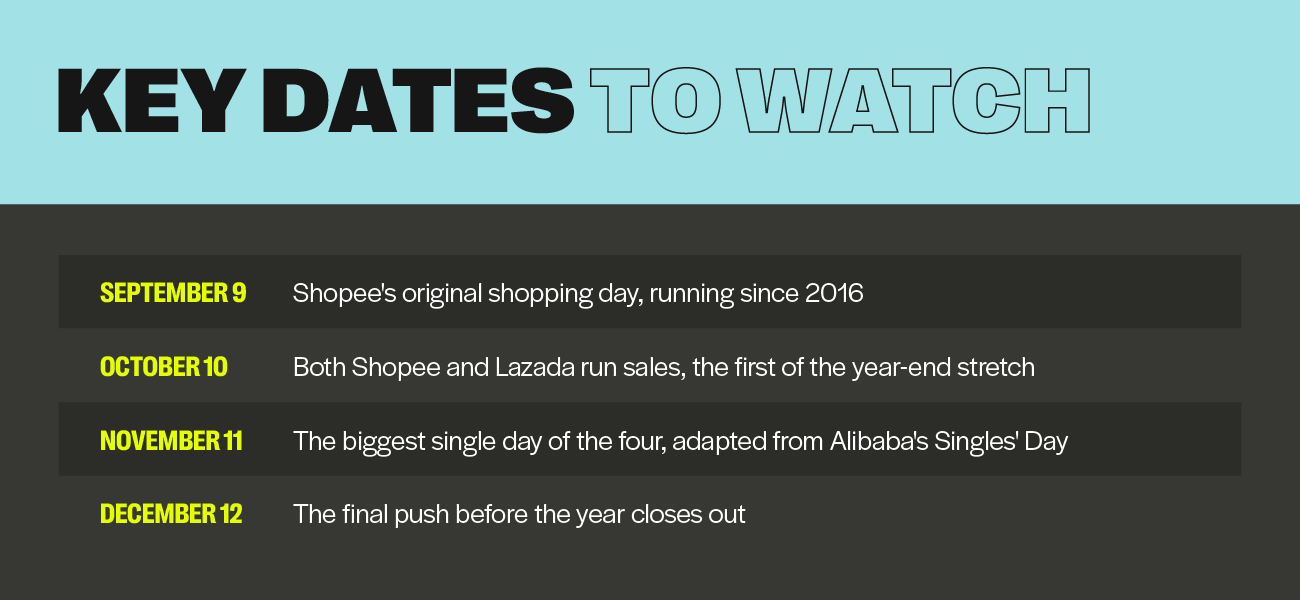
Four dates decide how big your Q4 gets in Southeast Asia. Shopee kicks things off with 9.9, Lazada and Shopee both run 10.10, then 11.11 and 12.12 close out the year.
It started as a simple holiday in China. The 11th of November (11.11), much like May 4th and Pi Day (3.14) before it, was too good to pass up by some creative students for Singles Day. I mean, you can’t get more single if you tried (2011 must have been a very thrilling time!). As with all great things, the day evolved into a huge day of sales and spending, perfectly placed between other holidays in the calendar.
In fact, 11.11 was so popular, they made a sequel – 12 Fast, 12 Furious, aka. The 12th of December. Very quickly, you had 4 months in a row, from September to December, each with a huge eCommerce sale. Thus, the double-digit sales days were born!
Key Takeaways
▪️ Four dates, one season. 9.9, 10.10, 11.11, and 12.12 run back-to-back through Southeast Asia’s Q4, each one driving a fresh spike in shopping traffic.
▪️ Prep beats reaction. Budgets, GEOs, and creative need to be set before the first date hits, not adjusted after the traffic already spiked.
▪️ Indonesia for volume, Vietnam, the Philippines, and Singapore for growth. Bid accordingly rather than splitting evenly.
▪️ Pop-Under and Display lead the format mix, with Interstitial and In-Page Push filling in around checkout and deadline moments.
▪️ The pool keeps converting after the date passes. Retarget in the gap between dates instead of resetting each time.
▪️ Publishers see the same lift, provided formats and content are ready before the traffic arrives.
Key Dates to Watch
▪️ 9.9 (September 9): Shopee’s original shopping day, running since 2016
▪️ 10.10 (October 10): Both Shopee and Lazada run sales, the first of the year-end stretch
▪️ 11.11 (November 11): The biggest single day of the four, adapted from Alibaba’s Singles’ Day
▪️ 12.12 (December 12): The final push before the year closes out
What Last Year Showed
Southeast Asia’s e-commerce platforms pulled in $157.6 billion in gross merchandise value last year, up 22.8% year over year, with Shopee holding around half the region’s platform share and TikTok Shop climbing to roughly a third.
Just three platforms, Shopee, Lazada, and TikTok Shop, now control 98.8% of all platform spending in the region which makes this a smaller and more predictable field to plan a campaign around than most regional ad opportunities. The four dates in this guide sit inside that same three-platform system.
When and How to Run Your Campaigns
If you want to catch the huge wave of traffic the double-digit sales days bring,, you need to prepare for it. This logic can be used for any major calendar event, ranging from sport to sales, huge news days to national holidays.
Expect three windows around each sales event: a run-up as shoppers browse and add to cart, a spike on the day as discounts go live, and a tail in the days after as abandoned carts convert. Budget for all three. A campaign that caps out on the day itself misses the tail, and one that only plans for the tail misses the spike.
Keep budgets flexible instead of fixed. With four dates running back to back through Q4, the advertisers who benefit most are the ones who can shift spend from a slower date to a bigger one without waiting on approval.
Live Campaign Strategy
Once a double-digit sales day actually goes live, the day itself has its own rhythm.
▪️ Increase bids as the event opens. Competition jumps the moment discounts go live.
▪️ Set Auto Rules to handle the rest. Four dates back to back is too much to babysit manually. If you’re running with Adcash, use the tools available. For example, let Auto Rules pause, adjust bids, and shift budget in real time so nobody’s watching a dashboard through 11.11 at midnight.
▪️ Watch for a second, smaller spike as the countdown closes. Shoppers rush to finish carts before a deal expires.
▪️ Check the Adcash Performance Tab for what automation won’t catch on its own, specific placements or device types quietly outperforming the rest.
Markets to Target
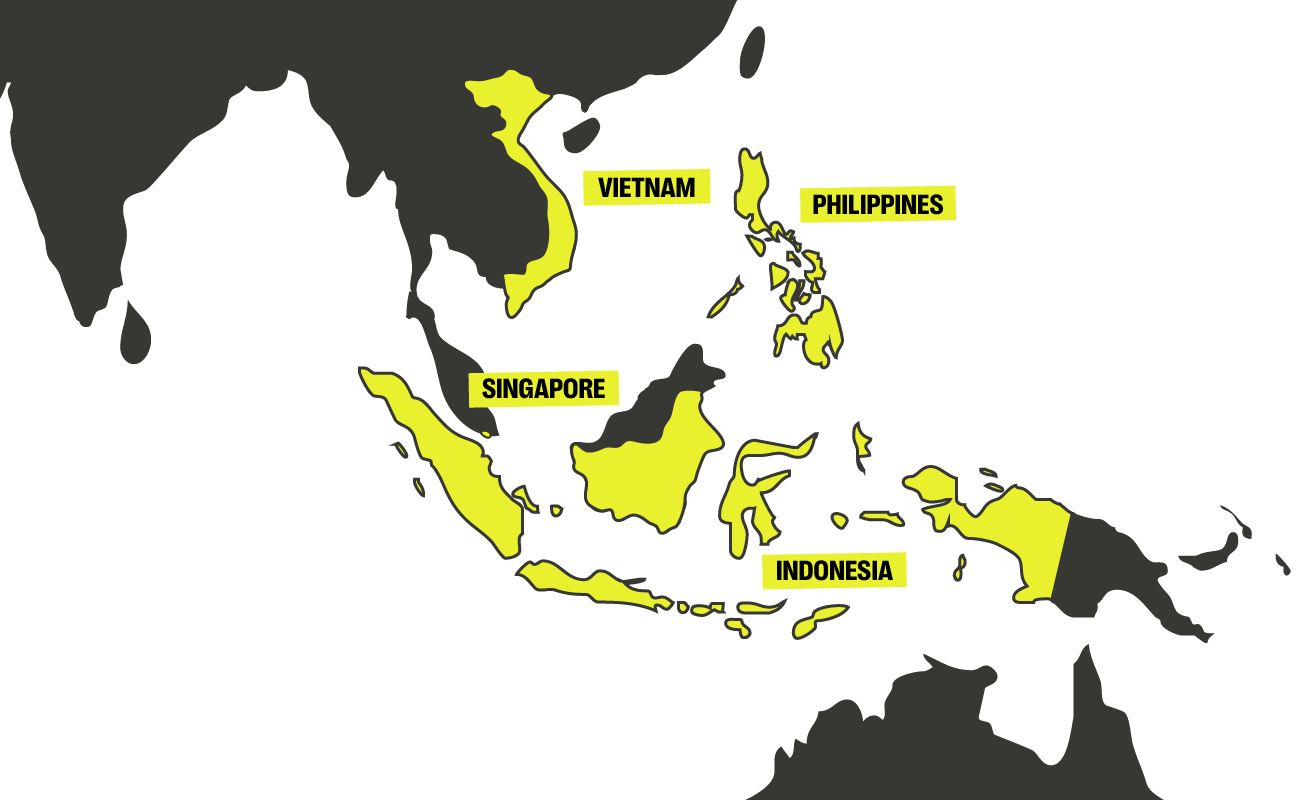
Established volume: Indonesia. Indonesia remains the largest market in the region by share, at 37%, though its growth slowed to 2.2% last year following a couple of high-profile platform exits. That’s still the biggest pool of shoppers in Southeast Asia, just a more contested one.
Fastest growing: Vietnam, the Philippines, Singapore. All three posted growth above 20% last year. Less saturated markets usually mean less competition for the same budget, so campaigns here often stretch further per dollar.
Treat this as a bidding tier list. Bid aggressively in Indonesia, where the volume and conversion history justify the cost. Stay competitive but controlled in Vietnam, the Philippines, and Singapore, where the audience is growing but the data is thinner. As results come in across the four dates, shift budget toward whichever tier is actually converting rather than splitting evenly on assumption.
Creatives for Sales Season
Retail and marketplace brands are the obvious fit. Creative that leans into the double-digit sales themselves, discounts, countdowns, limited stock, tends to outperform anything subtler.
Fintech and buy-now-pay-later offers do well too. A meaningful share of the spending during these events runs through installment plans, so an ad that speaks to affordability alongside the discount picks up shoppers the marketplace ads miss.
Logistics and delivery apps see their own lift as order volume climbs. Shoppers tracking a delivery mid-sale are engaged and checking their phones often, which makes for solid placement.
Match your landing page to the ad. A generic page after a countdown-themed ad loses the momentum you just built.
09.09 is where shopping intent meets massive opportunity. Increase your campaign budgets and own the spotlight by grabbing shoppers’ attention. This Super Sale could be your biggest sales day yet by turning today’s traffic into tomorrow’s loyal customers.

Vikram Singh
Business Development Manager, Adcash
Ad Formats
Your main focus should be building around display and pop-under. They make a really effective combination when it comes to eComm, especially in SEA.
Pop-Under gives you reach without interrupting the browsing or checkout flow a shopper is already mid-way through, which matters more during a sale than any other time of year. Display works well for retargeting shoppers who browsed during the run-up but didn’t buy yet.
The more ad formats the better though. It’s especially important to test different campaigns before the actual sales to find out what really works for your audience. Interstitial fits the moment right after checkout or between page loads, when attention is already high. Pair any of these with In-Page Push for offers with a hard deadline. A push notification with a few hours left on the clock tends to convert well.
Pro tip: work the discount percentage and the date itself into the creative. “50% Off, Today Only” does more work than a generic banner.
Payment Models
CPA Target is the strongest option if you can track conversions. It needs a bit of data to calibrate, but once it has it, bids adjust automatically as demand shifts across the four dates. CPM suits Pop-Under, since you’re paying for reach and reach is what a traffic spike gives you. CPC fits Display, Interstitial, and Push, so you’re only paying when someone actually engages.
With four dates running back to back, a flexible or monthly budget setting beats a fixed daily cap. Demand won’t look the same on 9.9 as it does on 11.11.
After the Sale Ends
Each double-digit sales date builds a pool of shoppers who saw your ad but didn’t convert, and that pool doesn’t go cold just because the sale ended. Keep a smaller retargeting budget running in the gap between dates, especially between 10.10 and 11.11 and again between 11.11 and 12.12. A shopper who browsed during one sale often comes back to buy during the next, and retargeting is what catches them when they do.
This is also a good moment to clean up what you learned. Note which placements or GEOs pulled their weight and which didn’t, then carry that into the next date rather than starting from scratch every few weeks.
A Note for Publishers
Everything above is written for advertisers, but the same four dates work in your favor too. All that campaign activity needs a home, and shoppers comparison shopping, reading reviews, and hunting for deals in the run-up to each date turn into extra earnings the moment your site is ready for them.
What we recently showed was that eComm, especially during these sale days, is effective on any site. No matter a user’s interest, there is going to be something they would be interested in buying.
Channel the combination of Pop-Under with Display and your pages will be primed and ready. The combination captures the extra volume without getting in the way of a potential shopper in the middle of something else.
One tip worth acting on: if any of your content touches deals, reviews, or shopping guides, lean into it around these four dates. That’s exactly the traffic advertisers are paying the most to reach right now.
If you’re not monetizing your SEA traffic yet, this run of four dates is a good stretch to start.
Conclusion
Southeast Asia’s double-digit sales season runs across four dates each year, 9.9, 10.10, 11.11, and 12.12, and each one drives a fresh spike in shopping traffic across the region. For advertisers, that means:
▪️ Budget across all four dates. Not just the biggest one; traffic builds before each date and continues after it.
▪️ Indonesia carries the volume. Vietnam, the Philippines, and Singapore carry the growth and lower competition.
▪️ Pop-Under, Display, and Interstitial capture the most traffic, with In-Page Push suited to deadline-driven offers.
▪️ Automation matters once all four dates are running back to back across a single quarter
Publishers see the same seasonal lift in earnings, provided formats and content are in place before the traffic arrives.
None of this works if the planning starts the week 9.9 hits. The advertisers who get the most out of this season are the ones with GEOs picked, budgets set, and creative built before the first date arrives. The wave shows up on schedule every year. Whether it’s worth anything depends entirely on what’s in place before it does.
Share

Peter Howarth
Content Writer, Adcash
Good writing should feel like a conversation, not a lecture. I obsess over word choice so you don’t have to.