
Pop-Up vs Pop-Under: The Complete Comparison Guide
Pop-up vs. pop-under ads – it’s a very common question. Aren’t they the same thing? Pop-up ads open directly in front of your browser window, cutting into whatever you were doing. Pop-under ads open behind your current tab, out of sight until you close or minimize that window.
That single difference in timing changes how users respond and how campaigns perform. It also means the two formats aren’t interchangeable for every advertiser. This guide breaks down how each one works and how to choose between them. Worth knowing upfront: Adcash runs pop-under exclusively, for reasons this guide will make obvious.
Key Takeaways
▪️Pop-ups interrupt on sight. They demand attention immediately, which suits urgent, time-limited offers but irritates users and triggers browser blocking.
▪️Pop-unders wait until you’re done. They stay out of view until the main window closes, leading to longer, calmer viewing and stronger engagement.
▪️Ad blockers hit pop-ups harder. Most browsers block pop-ups by default; pop-unders get blocked far less often.
▪️The format should match the goal. Flash sales and exit offers lean pop-up. Awareness and consideration-based campaigns lean pop-under.
▪️Frequency capping keeps either format from wearing out its welcome.
What Are Pop-up and Pop-under Ads?
Pop-up Ads
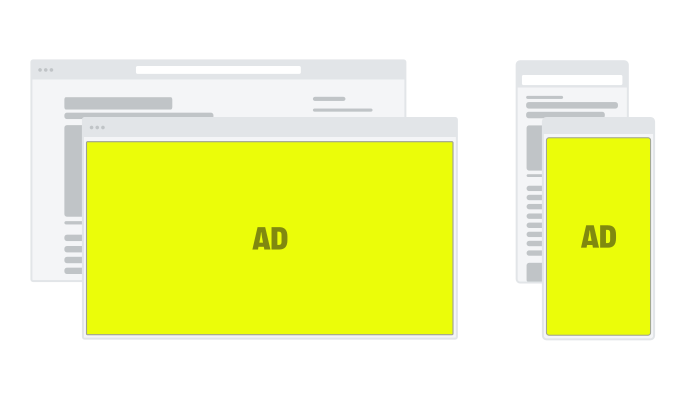
Pop-up ads load in a new window directly on top of the page. Whether someone’s reading, watching, or filling out a form, the pop-up takes over the screen until they close it or click through.
The format is one of the oldest in web advertising, built for a single job: stop the user and put an urgent message in front of them, like a flash sale or an exit-intent deal. That same directness is why modern browsers now block a large share of pop-ups by default, and why users have learned to close them without reading.
Pop-under Ads
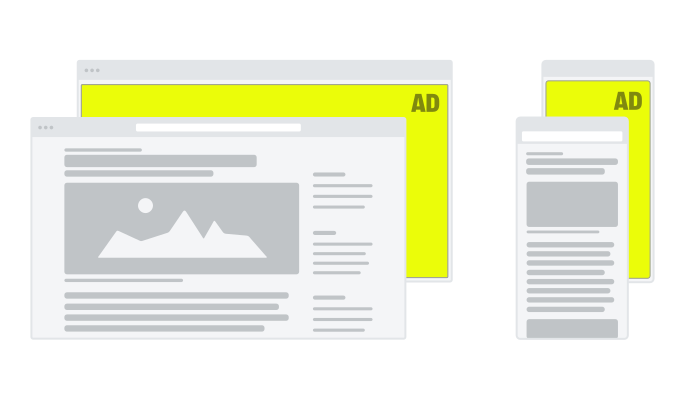
Pop-under ads also open a new window, but behind the tab someone is already using. The ad only becomes visible once they close or minimize the browser, at which point it’s simply there, waiting.
That delay changes the user’s state of mind. Someone finishing what they came to do is calmer and more receptive than someone mid-task, which is a big part of why pop-unders tend to hold attention longer and convert more consistently.
What Are the Key Differences Between Pop-Up and Pop-Under Ads?
The core distinction between pop-up vs pop-under ads comes down to timing and interruption. Pop-ups grab attention immediately, while pop-unders wait their turn.
| Factor | Pop-Up Ads | Pop-Under Ads |
|---|---|---|
| Visibility | Immediate, on top of content | Delayed, behind main window |
| User Interuption | High | Low |
| Attention Capture | Instant | After browsing session |
| Ad Blocker Vulnerability | Higher | Lower |
| Typical Engagement | Quick action or dismissal | Extended viewing time |
Pop-ups suit decisions that need to happen right now: sign up, claim the offer, don’t leave without seeing this. Pop-unders suit anything that benefits from a slower, more considered response.
Weighing Pop-up Vs Pop-under Ads
Pop-up vs pop-under ads – they solve different problems. The tradeoffs run in opposite directions.
Pop-up Ads: Fast, but Costly
▪️Guaranteed visibility. The ad appears the instant it fires, so timing is never the issue.
▪️Built for urgency. Works well for last-minute offers and countdown-timer flash sales.
▪️Real tradeoffs. Users find pop-ups intrusive, and browsers block a large share of them outright.
▪️Reflexive dismissal. Many people close pop-ups without reading them, simply out of habit.
Pop-under Ads: Slower, but Smoother
▪️Less friction. The ad doesn’t interrupt anything, so there’s less irritation and fewer people leave the site out of annoyance.
▪️More attention. Users see the ad after finishing their task, when they’re calmer and more receptive.
▪️Better delivery. Pop-unders avoid browser-level blocking far more often than pop-ups do.
▪️Stronger results. Performance data across verticals show higher-quality engagement and better conversion rates for offers that don’t require an immediate response.
▪️One limitation. Someone who closes a dozen tabs at once might never see the ad, and tracing a conversion back to a specific session can be trickier than with a same-window pop-up.
Adcash exclusively offers pop-under, not pop-up. It includes built-in anti-adblock technology to recover impressions it would otherwise miss. It also offers real-time reporting, so campaigns can be adjusted while they run.
Best GEOs and Verticals for Pop Traffic
Top Performing GEOs for Pop Ads
▪️Tier-1 countries: Higher competition and CPMs, but stronger purchasing intent and conversion quality.
▪️Tier-2 and Tier-3 countries: Lower costs with high volume potential, popular for scaling campaigns and testing offers.
▪️Emerging markets: Growing internet adoption creates fresh audiences with less ad fatigue.
High-converting Verticals for Pop Ads
▪️iGaming and sports betting: High user intent and engagement, especially during major sporting events.
▪️VPN and utility software: Strong fit for download-based conversions and free trial offers.
▪️Sweepstakes and lead generation: Low-barrier offers perform exceptionally well with pop traffic.
▪️Streaming and entertainment: Appeals to broad audiences seeking free content access.
▪️Finance and crypto: Works well with targeted messaging in relevant GEOs.
How to Choose Between Pop-up Vs Pop-under Ads
Traffic Type and Audience Behavior
Consider how the audience actually browses. Someone actively searching for something might tolerate a well-timed pop-up. Someone just browsing, reading an article, or scrolling without a clear goal usually responds better to a pop-under that doesn’t interrupt what they’re doing.
Campaign Goal and Vertical
Match the format to what the campaign actually needs. A flash sale or an exit-intent offer benefits from the urgency a pop-up creates. A brand awareness push, or an offer that benefits from consideration time, works better as a pop-under, since it gives people room to engage on their own schedule.
Device and Placement Considerations
Device matters too, though less than most advertisers assume. Desktop users are used to managing several tabs and discovering pop-unders when they finally close the browser. Mobile tab behavior is different, and pop-unders don’t always behave the same way across mobile browsers, so it’s worth testing before scaling a mobile campaign in either format.
User Experience Tolerance
Weigh how much interruption the audience will accept. A content site where people expect an uninterrupted reading experience calls for a pop-under. A landing page built purely for conversion can sometimes justify a pop-up’s more forceful approach.
Best Practices for Running Pop-up vs Pop-under Ad Campaigns
1. Set Smart Frequency Caps
A user who sees an ad once or twice is far more likely to engage than one who’s hit ten times in an hour, so cap exposure with frequency capping before fatigue sets in rather than after.
2. Match Creatives to Landing Pages
If the ad promises a discount, the landing page needs to deliver exactly that. Mismatched messaging is one of the fastest ways to undermine a campaign that’s otherwise working well.
3. Test Across GEOs and Devices
Run split tests to identify top-performing combinations before scaling. What works in Germany might flop in Brazil, and desktop performance rarely predicts mobile results.
4. Monitor Conversions in Real Time
Live reporting lets you cut underperforming segments and put more budget behind what’s working, without waiting for the next day’s report.
5. Use Anti-adblock Technology
Recovering blocked impressions maximizes both campaign reach and publisher revenue. If a significant portion of your audience uses ad blockers, anti-adblock solutions can meaningfully improve your results.
Conclusion
When it comes to Pop-up vs pop-under ads, they solve different problems. Pop-ups earn their place in a narrow set of cases: flash sales, exit-intent offers, anything running on a strict clock. Pop-unders cover almost everything else, since they don’t cost the site any goodwill and tend to convert better once the interruption is off the table.
That’s why Adcash builds its platform around pop-under only. It holds up across GEOs and verticals without asking users to tolerate an ad they didn’t choose to see, and it’s the safer default for most campaigns that aren’t racing a clock.
Get the fundamentals right, covered earlier in this guide, and pop-under gives you the strongest foundation to run on. You can learn more about pop-under ads in our complete guide.
Share
Learn more
Explore our resources and discover how to cultivate wisdom in an information-saturated world.