Pop-Under Ads: The Complete Guide (And Why They Still Work in 2026)
In this guide, we break down what pop-under ads are. We cover how they work, go over some misunderstandings, why they remain effective in 2026, and how to use them strategically to drive conversions while maintaining a positive user experience.
The Most Misunderstood Ad Format on the Internet
Pop-under ads have a reputation problem. Mention them and people immediately picture something annoying, outdated, borderline spammy. The kind of thing that shouldn’t still exist in 2026. Except… it does. And not by accident.
While most ad formats are busy fighting for attention and getting ignored, pop-unders have been doing something far less exciting and far more effective: quietly converting in the background.
This is a love letter to pop-under, because it’s one of the few formats that still works when everything else starts blending together. So let’s clear things up properly.
What Is a Pop-Under Ad?
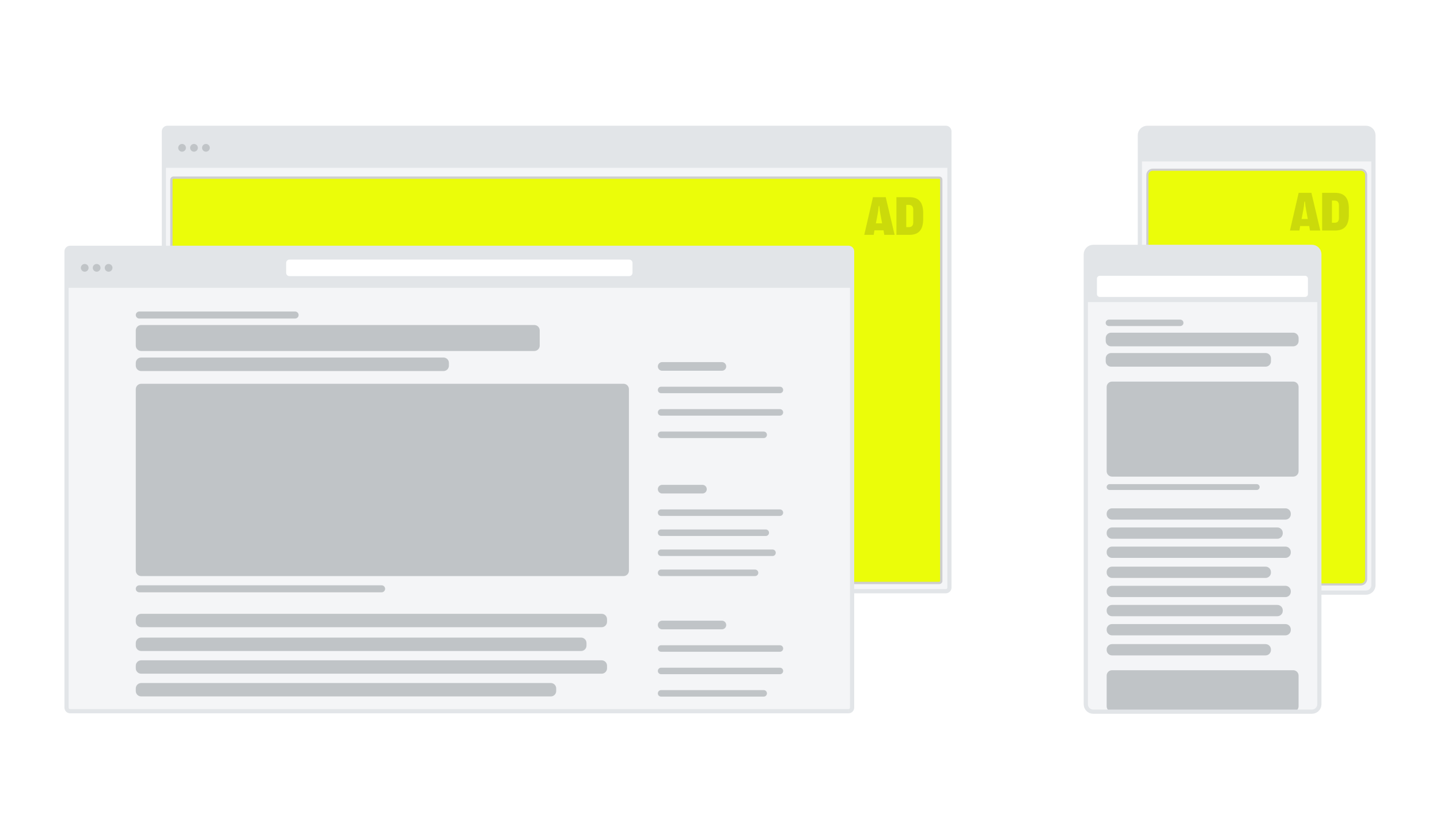
A pop-under ad is a full-page ad that opens behind the user’s current browser tab. That’s the whole trick.
Nothing jumps in their face. Nothing interrupts what they’re doing. The ad simply sits in the background and waits until the user is done with their session. When they close or switch tabs, the ad becomes the only thing left on screen.
That moment matters more than most people realize.
Pop-Under vs Pop-Up: What Are the Differences?
First things first, pop-under ads are not the same as pop-up ads. Yet for some reason, everyone thinks they are, including auto-correct. As I was writing this blog, it kept telling me I had spelled “pop-under” wrong (no, it’s not spelled “pop-up”!).
Pop-ups and pop-unders get lumped together, but they behave completely differently. A pop-up forces attention immediately. It interrupts the user mid-action and demands a reaction, which is exactly why people hate them.
A pop-under takes the opposite approach. It steps aside, waits its turn, and shows up when the user is already transitioning away from what they were doing. One fights for attention. The other earns it by timing.
Pop-Under Ad Examples
In most cases, a pop-under is triggered by a simple interaction, usually a click or tap. Once that happens, a new tab opens in the background without disrupting the current page.
The user keeps browsing as if nothing happened. There’s no friction, no break in flow. Only later, when they’re finished, does the ad come into view.
And that’s where the advantage kicks in. You’re not competing with content, scroll fatigue, or five other ads on the same page. You get a clean moment of attention, which is rare and valuable.
Are Pop-Under Ads Effective?
The internet is saturated with ads, and attention is harder to win than ever. Users scroll quickly, often skipping past, blending native placements into content, and clearing notifications without much thought. Most formats are competing for the same limited attention, which makes timing and placement more important than ever.
Pop-unders sidestep all of that by not trying to win the same battle. They don’t interrupt the user, which immediately removes the usual resistance. There’s no instinct to close them because there’s nothing to close. The experience stays intact.
They also show up at a better time. Instead of catching users mid-scroll, they appear at the end of a session when attention isn’t split, and the brain isn’t overloaded. That shift alone can make a huge difference in how the message is received.
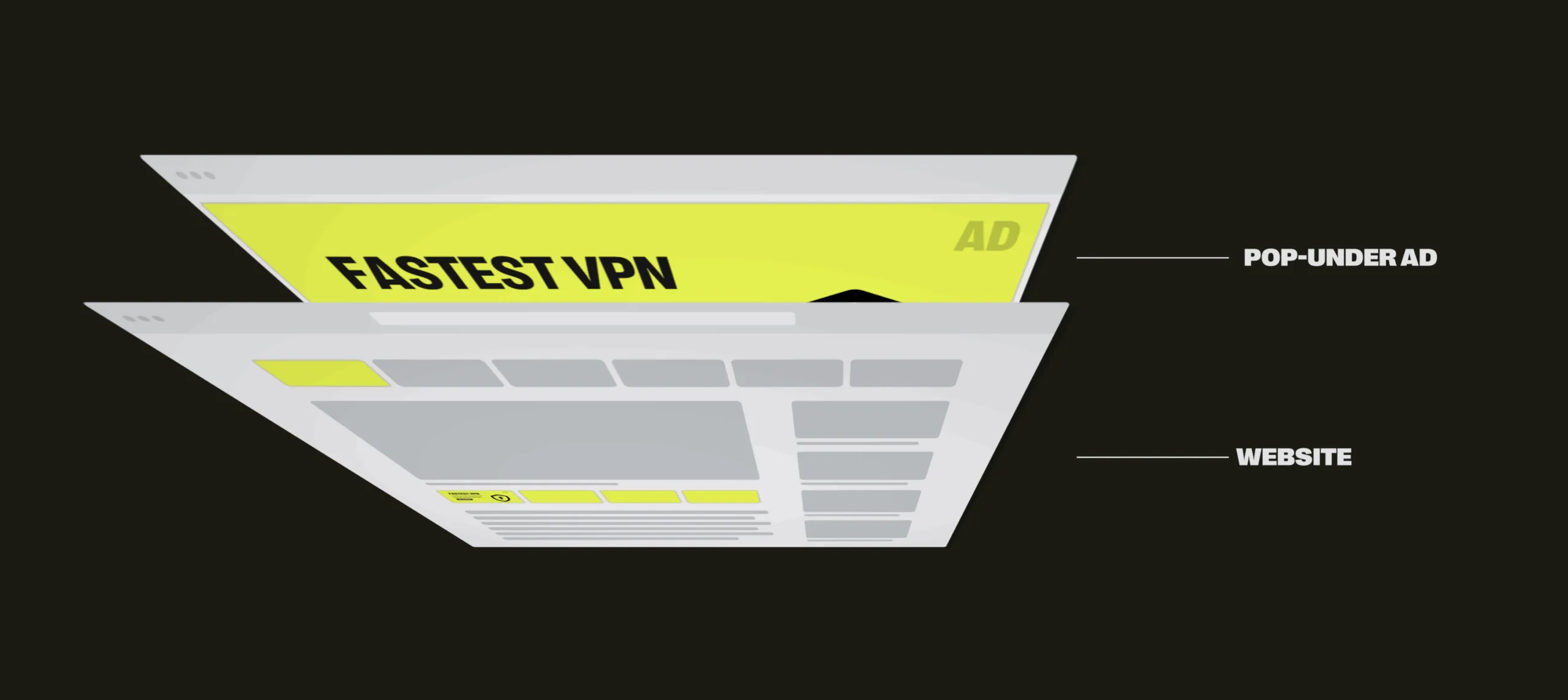
Then there’s the format itself. A pop-under isn’t a small placement squeezed into a corner. It’s a full page. That gives you space to actually communicate something meaningful instead of relying on half a sentence and a button.
Put all that together, and you get something most formats struggle to deliver: real, focused attention.
People Prefer Pop-Under Ads to Other Formats
A while back, WebGlide did a study where they tested different pop-under variables across various sites.
They split-tested the visibility of an active pop-under ad and displayed it to half of the site’s traffic, with the goal of seeing whether pop-unders caused a decrease in onsite sessions.

The results? Visitors seemed not to feel impacted by Pop-Unders and saw the ads as a natural part of the online experience.
The Psychology Behind Why Pop-Under Ads Convert
As a kid, I’m sure you played one of those memory games – The Name Game, The Supermarket Game…you know, the ones where you have to remember an ever-growing list of things. The first name is easy. The last name, clear as day. The names in the middle… not so much.
People tend to remember the last thing they see in a sequence. Not the tenth banner they ignored, but the final thing that appeared when everything else stopped. Pop-unders are built around that exact moment.
There’s also less resistance involved. Because the ad doesn’t interrupt anything, it doesn’t trigger the usual defensive reaction. Users aren’t trying to close it immediately. They’re more likely to actually look at it, even if just for a valuable, uninterrupted second.
On top of that, pop-unders don’t look like traditional ads. They feel like a new page, which bypasses a lot of the automatic filtering people apply to anything that smells like advertising. It’s a subtle shift, but it changes how the message lands.
Balancing Performance and User Experience (Without Killing Results)
Pop-unders don’t have a bad reputation because of the format. They have a bad reputation because people overdo them.
Used properly, they’re one of the least disruptive ad formats out there. Used badly, they become exactly what people expect: annoying, repetitive, and easy to ignore. The difference comes down to restraint.
Hitting users with multiple pop-unders in a single session might feel like maximizing exposure, but it usually does the opposite. It creates fatigue fast, and once that happens, performance drops with it. Giving users space between impressions keeps the experience clean and the attention meaningful.
Relevance matters just as much. Broad targeting might bring volume, but it rarely brings results. When the offer doesn’t match the user, even perfect timing won’t save it. A well-matched campaign with lower reach will almost always outperform a scattered one.
Then there’s the landing page, where most campaigns quietly fall apart. If the message doesn’t match the expectation, or the page feels slow, cluttered, or confusing, the attention you just earned disappears instantly. Pop-unders are great at exposing weak funnels.
Mobile is another easy place to slip. If the experience doesn’t translate properly across devices, performance suffers quickly. What works on desktop doesn’t always carry over cleanly.
None of this is complicated, but it does require discipline. Pop-unders work best when they’re treated as part of a considered strategy, not a volume game.
What Are the Best Verticals for Pop-Unders Ads?
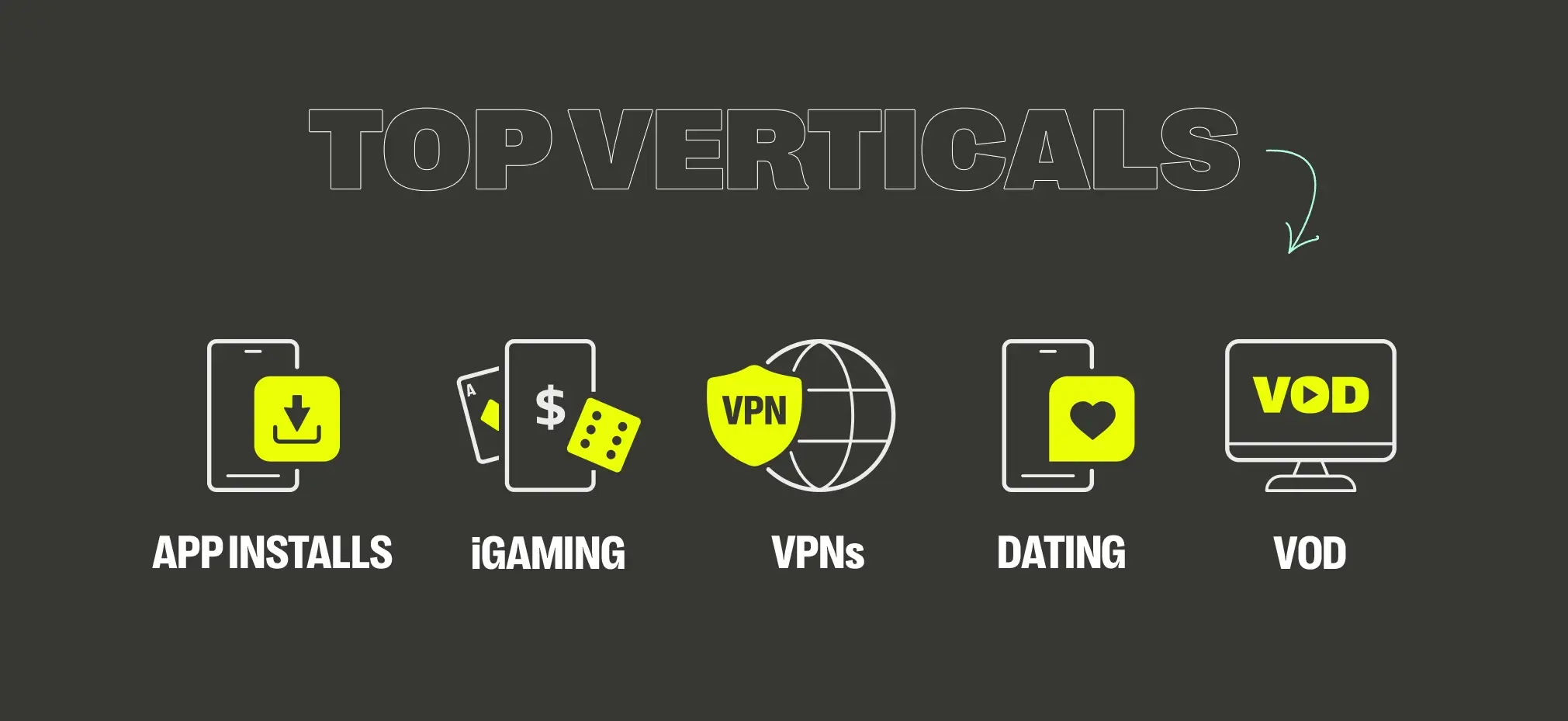
Not every offer benefits from delayed attention, but some categories are almost built for it. Anything that needs a bit more space to explain itself tends to perform well. That includes verticals such as:
- iGaming
- Dating
- VPNs
- VOD
- App Installs
These aren’t impulse clicks. They require a moment of focus, maybe even a bit of curiosity. A full-page format shown at the right time gives them exactly that.
Are Pop-Under Ads Right For You?
They’re a strong fit if your goal is conversions and your offer benefits from a bit of focused attention. If your funnel is solid and your messaging is clear, they can deliver consistent results without disrupting the user experience.
They’re a poor fit if you rely on instant engagement or if your funnel isn’t ready. In those cases, the format won’t fix the underlying problem; it’ll just make it more obvious.
Pop-under ads also work best when they’re not doing all the heavy lifting alone. They pair naturally with other formats, especially:
Think of it as a sequence: other formats spark interest or bring users in, while pop-unders capture that final moment of attention and push the conversion. Instead of competing, they reinforce each other, turning scattered touchpoints into a more complete, effective user journey. Adcash’s Autotag is a great tool for publishers in particular, cycling through these 4 formats, and making a huge difference to the journey.

Conclusion
Pop-under ads remain one of the most effective advertising formats for delivering full-page visibility without interrupting the user experience. By appearing at the end of a browsing session, they capture focused attention at the right moment, making them ideal for conversion-driven campaigns.
When used with proper targeting, frequency control, and strong landing pages, pop-under ads can consistently drive results on their own or as part of a multi-format strategy.
Pop-unders aren’t flashy. They’re not the format people rush to talk about. But they solve a problem most advertising still struggles with: getting real attention without forcing it.
While everything else fights to be seen, pop-unders wait until there’s nothing left to compete with. And that’s exactly why they keep working.
Share

Peter Howarth
Content Writer, Adcash
Good writing should feel like a conversation, not a lecture. I obsess over word choice so you don’t have to.