Digital Ad Fraud Prevention: How to Stop Fake Traffic
Digital ad fraud is something that advertisers deal with daily, so ad fraud prevention is something Adcash deals with every day. How do you prevent it? The best way is to filter it out before anyone pays for it. That means scanning every ad request for bots, data-center traffic, and other known fraud patterns, then checking campaign results against real conversions. However, that’s a lot of manual work if you choose to do it all yourself.
At Adcash, this filtering is done in-house, and we take it very personally. Every fake click is money taken from an advertiser who trusted us with their budget. Every bot visit puts an honest publisher’s earnings at risk. Our fraud team has spent 12 years making sure advertisers pay for real people, and publishers get paid for real views.
This guide shows how we do it, the fraud types we see most often, the warning signs, and what you can do yourself.
Key Takeaways
- Ad fraud is best stopped before the click is paid for, by filtering fake traffic at the source.
- Adcash filters fraud in-house with bot traps, data centre filters, and a traffic scoring model.
- The most common types are bot traffic, click farms, ad stacking, pixel stuffing, and fake conversions.
- Warning signs include high CTR with no conversions and traffic spikes at odd hours or from odd locations.
- Advertisers should bid on results (CPA) and track conversions. Publishers should never buy traffic.
What is Ad Fraud?
Ad fraud is any attempt to take money from advertising budgets. It’s about creating fake ad impressions or clicks, showing ads outside of a consumer’s view, or using other fabricated methods to deliver ads that real users don’t see.
Digital ad spend will reach about $836 billion in 2026. Wherever ad spend grows, fake traffic follows. Juniper Research expects ad fraud to cost $172 billion a year by 2028.
Fraudsters follow the money. Wherever ad spend grows, fake traffic follows, and unfortunately, both sides of the market pay for it:
- Advertisers lose budget on views and clicks that will never turn into customers.
- Publishers lose trust and payouts. When a network finds fake traffic on a site, that traffic is not paid for, and the site can be blocked.
Ad fraud is also one of the main risks in programmatic buying. To learn how programmatic ads work, read our guide to programmatic ads.
How Does Adcash Protect Against Ad Fraud?
Ad fraud prevention works in two stages. First, we check each ad request before the auction and block anything that matches a known fraud pattern. Then we review the results after the auction, catch what slipped through, and make sure no one pays for it.
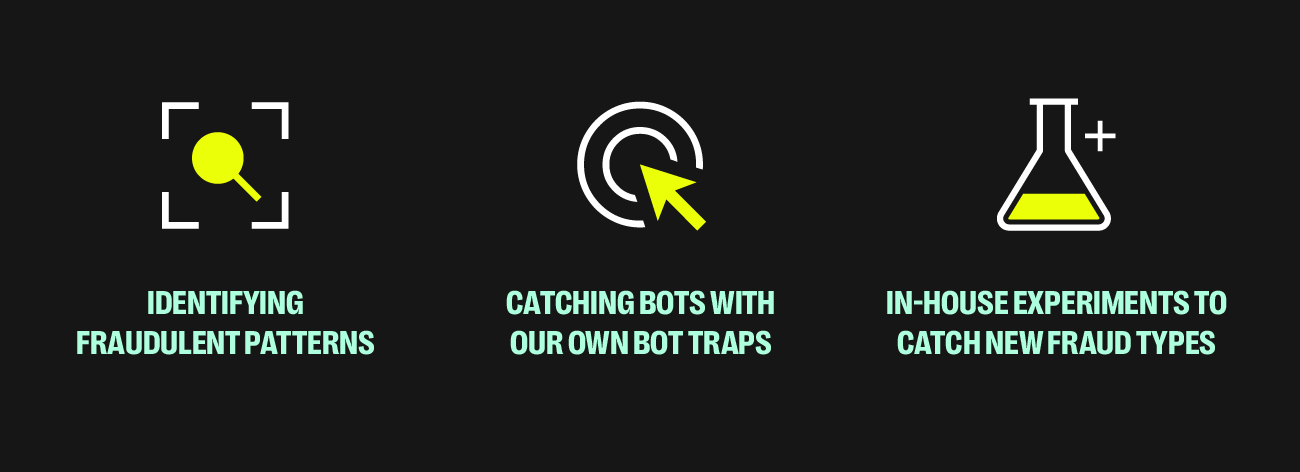
With 12 years of learning how fraudsters think under our belts, we’re well equipped to notice fraud patterns. When they change tactics, we change ours. Here is what they work with:
- Bot traps catch automated scripts that act like real visitors.
- Data-center filters block traffic from servers, where real users rarely browse.
- A scoring system rates each traffic source, so poor sources can be limited or blocked.
- Blocking and refunds. Publishers caught sending fraud are blocked, whatever their size. Advertisers who report fake traffic can get refunds.
The results:
- 26.8% of ad requests are filtered out.
- 3.9 billion impressions are filtered out every month.
- $32.8 million in campaign budgets saved for advertisers in 2025.
Filters Are Tested Before They Go Live
Blocking fraud is the easy part. Blocking fraud without hurting honest publishers is harder. A filter that is too strict can cut off real users and the revenue that comes with them.
So every new filter starts in test mode: it collects data but blocks nothing. We check the results, and only then switch it on. If a filter ever blocks good traffic by mistake, we roll it back fast.
As our senior product manager puts it, publishers only succeed when advertisers succeed. That is why each filter is checked against background data before it blocks anything. We would rather test a filter for longer than block an honest publisher by mistake.
Proxy, VPN and Data-Center Traffic
Fraudsters like to hide. Proxies, VPNs and data centre IP addresses let one machine pretend to be thousands of users in dozens of countries. To find them, our fraud team checks every IP address against specialist IP data and feeds the results into our own scoring model.
It pays off. Since we added these IP checks, sales for CPA advertisers have grown by 1–10%, and our traffic suppliers have seen 5–10% growth.

Most Common Ad Fraud Types
Most ad fraud falls into five types. Some fake the user, some fake the ad view, and some fake the result.
| Type | How it works | Who it hurts |
|---|---|---|
| Bot traffic | Scripts load pages and click ads like real users | Advertisers, publishers |
| Click farms | Paid workers click ads or install apps at scale | Advertisers |
| Ad stacking | Several ads are layered in one slot, so only the top one is seen, but all are counted | Advertisers |
| Pixel stuffing | An ad is shrunk to a 1x1 pixel, so no one sees it, but it still counts as an impression | Advertisers |
| Fake conversions | Fake leads, sign-ups or installs trigger payouts | Advertisers, networks |
What Are the Warning Signs of Ad Fraud?
The good news is fake traffic is easy to spot when you know the signs. Fake traffic rarely looks like real traffic in your reports. Watch for these signs in particular:
- High CTR, but with no conversions. If you’re seeing a lot of clicks but no sales or sign-ups, this often means bots or click farms.
- Sources that spend but never convert. Check if one or two of your placements use a large share of your budget with no results.
- If you see spikes at odd hours or from odd places. Traffic jumps at night in your target country, or comes from locations you did not target.
- A rising share of proxy or data-center traffic. Real users rarely browse from servers.
If all else fails, go back to the most basic scam advice out there. If results look too good to be true, they probably are. If something looks wrong, contact your account manager as soon as you can.
How to Prevent Ad Fraud
Ad fraud works when no one is looking closely. So the best protection is to make sure someone always is.
To prevent ad fraud, block fake traffic before it’s paid for, then check your results against real conversions. Blocking is our job. Checking is where you come in.
How Can Advertisers Prevent Ad Fraud?
- Bid on results. With CPA Target bidding, you pay for conversions, not clicks. Fake clicks cost you less, and they are easier to spot.
- Track conversions. Set up conversion tracking so you can see which traffic turns into customers.
- Blacklist poor zones. Block placements that spend without converting.
- Set frequency caps. Limit how often one user sees your ad. Bots often load the same ad many times.
- Talk to your account manager. If results look too good or too bad, report it. Fraud reports help us improve our filters.
How Can Publishers Prevent Ad Fraud?
- Never buy traffic from unknown sources. Cheap traffic that seems like a great deal is often bots in disguise. It can quickly get your account blocked.
- Avoid placements that cause misclicks. Ads placed where users click them by accident look like fraud, especially with Pop formats.
- Monitor traffic quality. Watch for sudden spikes or traffic from places you do not expect, and report anything suspicious to Adcash.
Conclusion
Ad fraud is sadly not going away. In fact, as online ad budgets rise, so will the fraud that follows, wanting a slice of the pie. The good news is most fraud can be stopped before it costs anyone a cent.
We filter it at the source. Advertisers bid on results and track conversions. Publishers keep their traffic clean and speak up when something looks off. When everyone does their part, fraudsters run out of places to hide.
FAQ
What is the difference between ad fraud and click fraud?
Click fraud is one type of ad fraud. It covers fake clicks only. Ad fraud also includes fake impressions, hidden ads and fake conversions.
Is ad fraud illegal?
In many countries, yes. Ad fraud can count as fraud under criminal law, and some cases have led to prison sentences.
Can ad fraud be stopped completely?
No. Fraudsters change their methods all the time. But filtering before and after the auction, plus checking results against conversions, stops most of it before it is paid for.
Share

Peter Howarth
Content Writer, Adcash
Good writing should feel like a conversation, not a lecture. I obsess over word choice so you don’t have to.