What is Real-Time Bidding (RTB)?
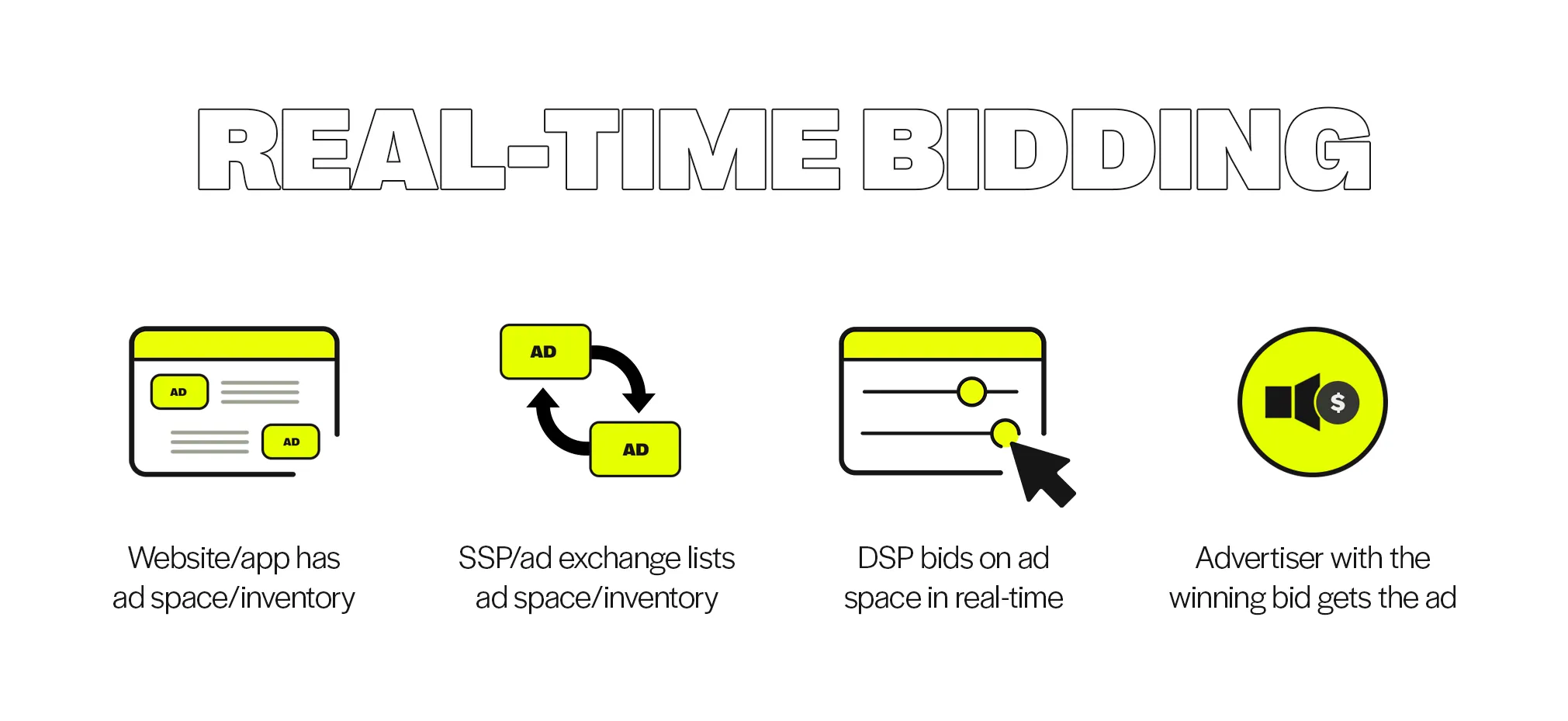
Real-time bidding (RTB) is a type of programmatic advertising in which ad impressions are auctioned and sold individually. This happens in real time, the moment a user loads a webpage. Each auction takes milliseconds.
Advertisers bid on impressions that match their targeting criteria. The auction selects a winner based on factors like bid price, ad format, and the publisher’s floor price. The winning ad is delivered to the page automatically.
How Does Real-Time Bidding Work?
Step 1 – A user visits a page. This gives the publisher an available ad impression.
Step 2 – A bid request is sent. The information containing things like device, GEO, placement, and audience is passed to the auction.
Step 3 – Advertisers evaluate the impression. This is the moment DSP’s decide whether to bid or not, and how much.
Step 4 – The auction takes place. The DSP’s that decided they will bid compete in real time.
Step 5 – The highest eligible bid wins. Its ad is displayed on the publisher’s site to the user immediately.
Real-Time Bidding: The DSP
Advertisers use a Demand-Side Platform (DSP) to buy ad space through real-time auctions. A DSP acts as a broker, providing a centralized media buying platform that takes from multiple ad exchanges. It gives access to a wide range of available inventory across different sites and apps. The DSP can also be used to target specific needs, such as browsing behavior and location.
When an impression matches the advertiser’s criteria, the DSP submits a bid. If the bid wins, the selected ad creative is delivered to the page within milliseconds.
RTB helps advertisers spend smarter by giving them more control over how they bid on each impression. When campaigns are optimized using this data, results like conversions and ROAS often improve. RTB also makes it easier to adjust bids, targeting, and creatives based on performance.
Real-Time Bidding: The SSP
Publishers use a Supply-Side Platform (SSP) to monetize their ad inventory. The SSP lets multiple advertisers and demand sources compete for each impression in real time.
Through an SSP, publishers can control how their inventory is sold by setting rules such as:
- minimum price (floor price)
- ad format (banner, video)
- placement rules (where ads can appear)
Because multiple buyers compete for every impression, RTB can increase revenue and improve CPM. It also helps publishers understand demand patterns, so they can optimize floor prices, placements, and inventory packaging to increase overall yield.
Real-Time Bidding Example
A user just opened their favorite “90s collectables” blog site. The main page has space for a video slider ad to come in at the bottom of the screen.
At the moment the web page was open, a request was sent to an RTB auction. Advertisers wanting a space on that site can start placing bids. For example, an e-commerce site might bid strongly for the impression because the user is likely interested. A supplement company might bid significantly less because it’s significantly less relevant. A fitness brand might make a hopeful, low bid.
Based on the auction rules and bids submitted, the highest eligible bid wins (in our case, the e-commerce site had the highest bid), and its ad creative is displayed on the blog by the time it finishes loading.
There’s more to it, though. The e-commerce company outbid the supplement brand by a long way. They won’t have to pay that much for the ad, though, thanks to the second-price auction system. The winning bid would only be $0.01 higher, ensuring they win, yet preventing them from overpaying.
This is a perfect example of how publishers can earn the best price for each impression, and how advertisers have a chance of reaching the right user at the right moment.
What are the Benefits of Real-Time Bidding?
RTB creates competition for every impression. This helps publishers increase yield, improve fill rates, and sell inventory at prices that match real market demand.
RTB also gives both sides more control. Advertisers can adjust bids and targeting based on performance. Publishers can set floor prices, protect premium placements, and choose which buyers can access their inventory to improve monetization over time.
How Does Real-Time Bidding Improve Ad Campaign Performance?
Real-Time Bidding gives advertisers more flexibility in how they value each impression. Instead of paying a fixed price, advertisers can bid differently based on user value and campaign goals.
This flexibility helps advertisers allocate budget more efficiently and focus spending on impressions that matter most. Because the process is automated, campaigns can also scale across many websites and apps without manually buying placements one by one. The result is usually stronger performance and better return on ad spend.
How to Get Started with Real-Time Bidding
To start with RTB, you first need the right platform. Advertisers typically use a DSP, while publishers use an SSP. The goal is to pick a solution that matches your needs and gives you clear controls, reporting, and optimization tools.
Once you’re ready, set your budget and bidding strategy. RTB allows flexibility, but bids still need to be competitive to win auctions and generate results.
Finally, monitor performance regularly and optimize over time. RTB is competitive by nature, so performance needs to be monitored continuously and strategies adjusted to stay relevant.
FAQ
RTB vs programmatic advertising: what’s the difference?
Programmatic advertising is the broader category of automated media buying. RTB is one type of programmatic buying where impressions are auctioned in real time.
What Are RTB Ads?
RTB ads are not a separate ad format. They are ads purchased through real-time bidding. The format can be display, video, pop-under, in-page push, or any other digital ad placement, depending on the platform and publisher inventory.
Share

Peter Howarth
Content Writer, Adcash
Good writing should feel like a conversation, not a lecture. I obsess over word choice so you don’t have to.